Category: Muscle Building

  • Ultimate Beginner Muscle Building Guide: Build Muscle the Right Way

    Ultimate Beginner Muscle Building Guide: Build Muscle the Right Way

    Building muscle can seem complicated when you’re just starting out.

    You may have seen complicated workout routines, athletes eating huge amounts of food, people discussing supplements you have never heard of, and conflicting advice about how many sets and repetitions you should do.

    It can leave you wondering: What should a beginner actually do to build muscle?

    The good news is that gaining muscle doesn’t require a complicated program. If you’re new to strength training, your body can respond remarkably well to consistent resistance exercise, adequate nutrition, and proper recovery.

    This Ultimate Beginner Muscle Building Guide breaks the process down into simple, practical steps. You’ll learn how muscle growth works, how to structure your workouts, what to eat, how much protein you need, how to progressively increase your training, and which mistakes could hold you back.

    Whether you’re training in a commercial gym in Islamabad, Lahore, Rawalpindi, Karachi, or anywhere else in Pakistan, the fundamentals remain the same.

    You don’t need to become an expert overnight.

    You need a good plan, patience, and the discipline to follow it.

    Beginner Tip: Your first goal shouldn’t be to lift as much weight as possible. Your first goal should be to learn good technique and build a consistent training habit.

    What Actually Makes Muscles Grow?

    Before worrying about supplements or advanced workout routines, understand the basic principle behind muscle growth.

    When you perform resistance exercises, your muscles experience mechanical tension and other training-related stresses. Your body then adapts to the training stimulus by repairing and strengthening the muscle tissue.

    Over time, consistently challenging your muscles can lead to muscle hypertrophy, meaning an increase in muscle size.

    Three things matter tremendously:

    1. Resistance Training

    You need to give your muscles a reason to adapt.

    This comes from exercises such as:

    • Squats
    • Bench presses
    • Rows
    • Pull-downs
    • Overhead presses
    • Lunges
    • Romanian deadlifts
    • Curls
    • Triceps extensions

    2. Nutrition

    Your body needs energy and nutrients to support training and recovery.

    Protein provides amino acids needed for muscle protein synthesis, while carbohydrates and fats provide energy and other essential nutrients.

    3. Recovery

    Your body needs time between challenging workouts to recover and adapt.

    That’s why training harder isn’t always better.

    Train → Recover → Adapt → Repeat.

    That’s the basic cycle behind successful muscle building.

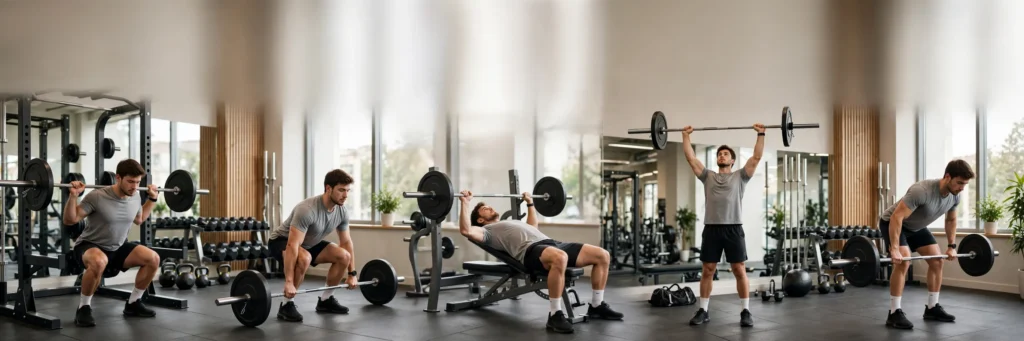
    Beginner learning muscle building fundamentals

    How Long Does It Take to Build Muscle?

    One of the first questions beginners ask is:

    “How quickly can I gain muscle?”

    There isn’t one number that applies to everyone.

    Your results depend on factors such as:

    • Training experience
    • Genetics
    • Age
    • Nutrition
    • Sleep
    • Training consistency
    • Starting body composition
    • Exercise technique
    • Recovery

    Beginners often make noticeable improvements in strength relatively quickly because their bodies are adapting to a new training stimulus.

    Visible muscle growth takes longer.

    This is why you shouldn’t judge your progress after one or two weeks.

    Instead, think in terms of months rather than days.

    Your First Few Months Should Focus On:

    • Learning proper technique
    • Building consistency
    • Establishing a sustainable diet
    • Getting enough protein
    • Improving strength
    • Tracking workouts
    • Getting enough sleep

    Don’t compare your first month to someone’s fifth year.

    You’re at a different stage of the journey.

    The 5 Foundations of Beginner Muscle Growth

    If you remember nothing else from this guide, remember these five principles.

    FoundationWhat It Means
    Resistance TrainingChallenge your muscles consistently
    Progressive OverloadGradually increase training demands
    Protein & NutritionGive your body nutrients needed for growth
    RecoveryAllow your body time to repair and adapt
    ConsistencyFollow the process long enough to see results

    Most beginners spend too much time looking for a secret exercise or supplement.

    There isn’t one.

    The basics work when you actually do them consistently.

    Step 1: Set a Realistic Muscle-Building Goal

    Before starting a muscle-building program, establish what you’re trying to accomplish.

    Your goal might be:

    • Build your first noticeable amount of muscle
    • Become stronger
    • Improve your physique
    • Gain healthy body weight
    • Develop specific muscle groups
    • Become more athletic

    Avoid vague goals such as:

    “I want to get huge.”

    Instead, create measurable goals.

    For example:

    Weak goal:
    “I want bigger arms.”

    Better goal:
    “I want to follow a structured strength program three times per week and progressively improve my upper-body exercises over the next 12 weeks.”

    The second goal gives you something you can actually control.

    Step 2: Choose the Right Training Frequency

    You don’t need to train seven days a week to build muscle.

    For a beginner, three full-body strength sessions per week can be an excellent starting point.

    For example:

    DayTraining
    MondayFull Body
    TuesdayRest / Light Activity
    WednesdayFull Body
    ThursdayRest
    FridayFull Body
    SaturdayOptional Light Cardio
    SundayRest

    This schedule gives you enough training stimulus while allowing recovery between sessions.

    As you become more experienced, you can experiment with different training schedules.

    Step 3: Focus on Compound Exercises

    Compound exercises involve multiple joints and muscle groups.

    They are particularly useful for beginners because they allow you to train several major muscles efficiently.

    Important Compound Exercises

    Chest

    • Bench Press
    • Dumbbell Press
    • Push-Ups

    Back

    • Lat Pulldown
    • Pull-Ups
    • Seated Cable Row
    • Dumbbell Row

    Legs

    • Squats
    • Leg Press
    • Lunges
    • Romanian Deadlifts

    Shoulders

    • Overhead Press
    • Dumbbell Shoulder Press

    These exercises can form the foundation of a beginner muscle-building program.

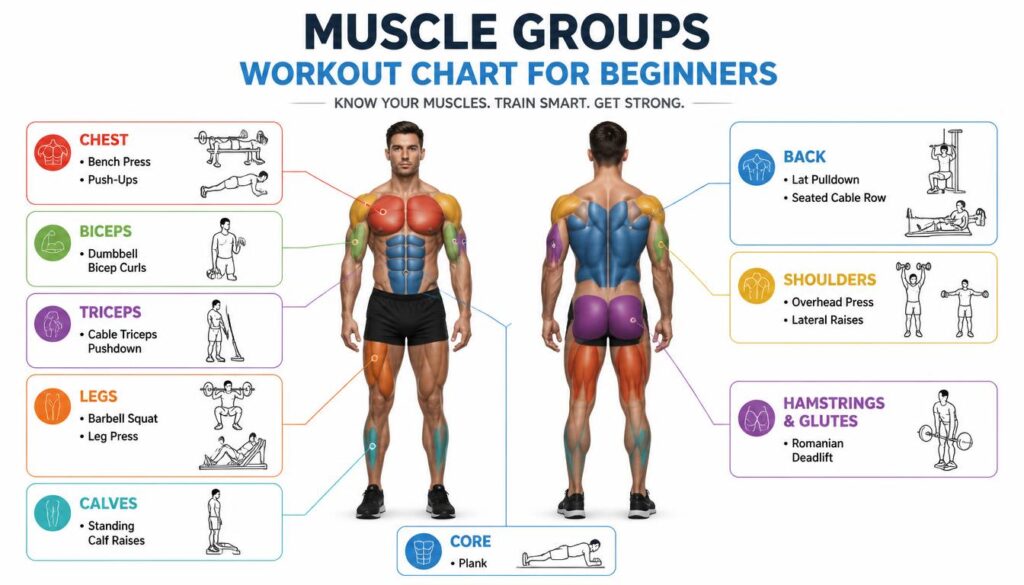
    compound strength exercises

    Step 4: Learn Proper Exercise Form

    Don’t rush to increase the weight.

    A heavier dumbbell doesn’t automatically mean a better workout.

    Poor technique can reduce the effectiveness of an exercise and increase the chance of injury.

    When learning a new exercise:

    1. Start with a light resistance.
    2. Learn the movement pattern.
    3. Practice controlled repetitions.
    4. Keep your range of motion appropriate.
    5. Ask a qualified trainer for feedback when necessary.
    6. Increase resistance gradually.

    A Simple Rule

    Technique first. Weight second.

    If you can’t control the movement, the weight is probably too heavy.

    Step 5: Understand Sets and Repetitions

    Two terms you’ll hear constantly in the gym are sets and reps.

    Repetition

    One complete movement is one repetition.

    For example, performing one complete dumbbell curl equals one rep.

    Set

    A group of repetitions performed together is a set.

    For example:

    3 sets × 10 reps

    means you perform 10 repetitions, rest, and repeat that sequence three times.

    For muscle-building training, a variety of repetition ranges can be effective when sets are sufficiently challenging and performed with appropriate technique.

    Beginners don’t need to obsess over finding one “perfect” rep range.

    Instead, prioritize:

    • Good form
    • Appropriate resistance
    • Consistent training
    • Gradual progression

    Step 6: Start With a Simple Beginner Muscle-Building Workout

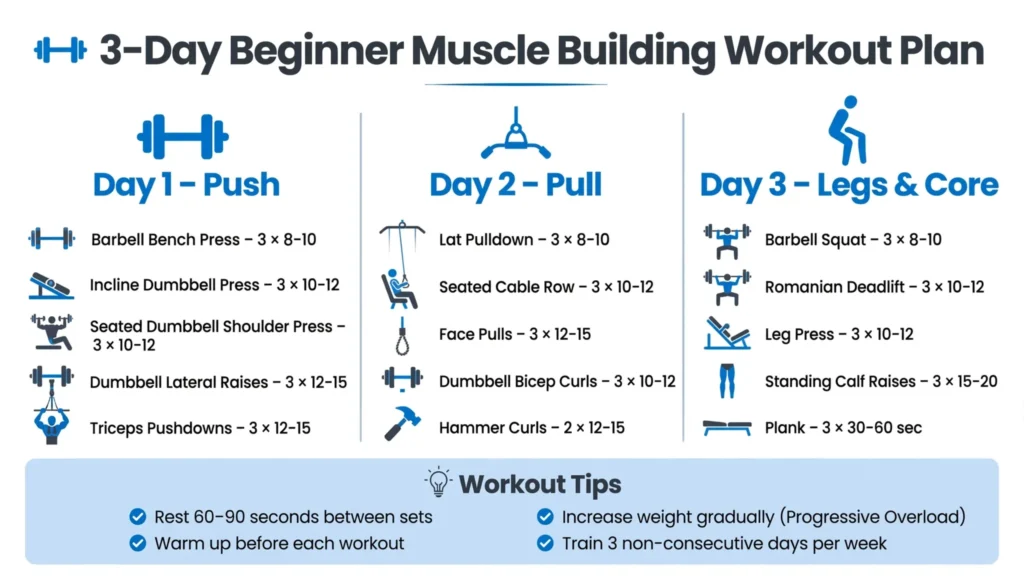
    Here’s a straightforward three-day routine that can serve as a starting framework.

    Day A

    ExerciseSetsReps
    Goblet Squat38–12
    Dumbbell Bench Press38–12
    Lat Pulldown38–12
    Dumbbell Romanian Deadlift28–12
    Dumbbell Curl210–15
    Triceps Pushdown210–15

    Day B

    ExerciseSetsReps
    Leg Press38–12
    Machine Chest Press38–12
    Seated Cable Row38–12
    Dumbbell Shoulder Press28–12
    Leg Curl210–15
    Calf Raise210–15

    Day C

    ExerciseSetsReps
    Squat Variation38–12
    Incline Dumbbell Press38–12
    Lat Pulldown or Assisted Pull-Up38–12
    Romanian Deadlift28–12
    Lateral Raise210–15
    Biceps Curl210–15

    You can alternate A/B/A one week and B/A/B the next.

    Rest Between Sets

    A practical starting point is around 1–3 minutes, depending on the exercise and how demanding the set is.

    For larger compound movements, you may need longer rest periods to maintain good performance.

    Three-day beginner muscle building workout plan

    Step 7: Understand Progressive Overload

    This is one of the most important concepts in muscle building.

    Your muscles need a reason to adapt.

    If you perform exactly the same workout with exactly the same resistance forever, your body eventually has less reason to continue adapting.

    Progressive overload means gradually increasing the demands placed on your body.

    This doesn’t always mean adding more weight.

    You can progress by:

    • Increasing weight
    • Performing more repetitions
    • Adding a set
    • Improving technique
    • Increasing range of motion where appropriate
    • Improving control
    • Reducing unnecessary rest in suitable exercises

    Example

    Week 1:

    Dumbbell Bench Press
    10 kg × 10 reps

    Week 2:

    10 kg × 12 reps

    Week 3:

    12 kg × 10 reps

    The exact progression will vary from person to person.

    The important idea is:

    Give your body a manageable reason to improve.

    Beginner Tip: Don’t Chase the Weight Stack

    If you can lift a heavier weight only by swinging, jerking, or changing your technique, you’re not necessarily progressing.

    A controlled set with excellent technique is more valuable than a sloppy set performed just to impress someone.

    Step 8: Learn How Hard Your Sets Should Feel

    Beginners often make one of two mistakes:

    Mistake 1: The weight is so light that the exercise provides little challenge.

    Mistake 2: The weight is so heavy that technique breaks down.

    A useful concept is repetitions in reserve (RIR).

    If you finish a set and believe you could have performed about three more good repetitions, that’s roughly 3 RIR.

    Beginners generally don’t need to take every set to complete muscular failure.

    Leaving a small number of good repetitions in reserve can help you maintain technique and manage fatigue while learning.

    Step 9: Eat Enough Protein

    Training gives your muscles a reason to grow.

    Nutrition supplies the materials your body needs to support that process.

    Protein is especially important.

    Protein-rich foods include:

    • Eggs
    • Chicken
    • Fish
    • Milk
    • Yogurt
    • Cottage cheese
    • Lentils
    • Chickpeas
    • Beans
    • Lean beef
    • Soy products

    For exercising individuals, a commonly recommended protein intake for supporting muscle growth is approximately 1.4–2.0 grams of protein per kilogram of body weight per day, depending on individual circumstances and goals.

    For example, someone weighing 70 kg could fall around:

    98–140 grams of protein per day.

    You don’t need to hit the exact same number every day. Think of it as a useful range rather than a magic target.

    If you have kidney disease or another medical condition that affects your diet, speak with a qualified healthcare professional before significantly increasing protein intake.

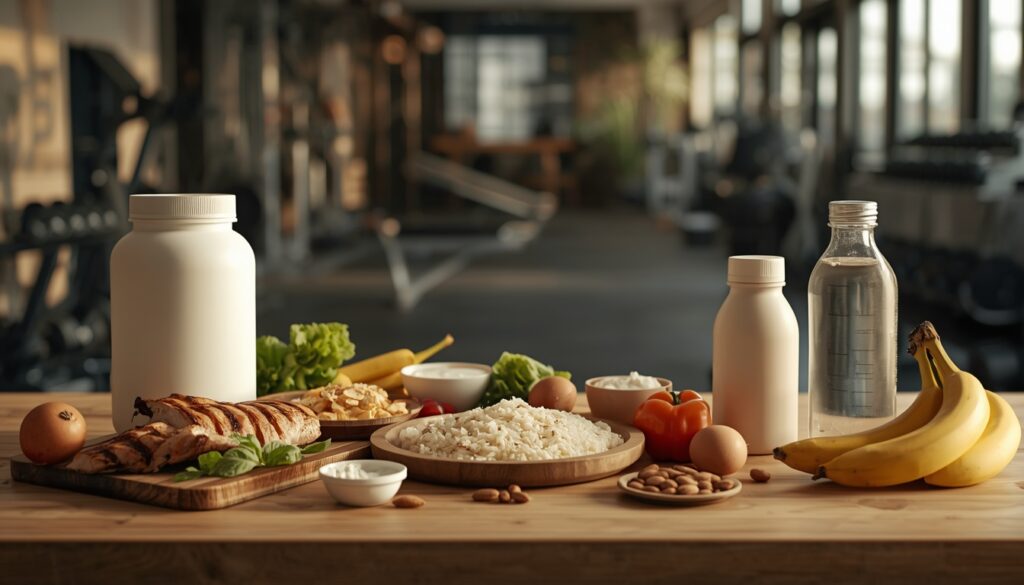
    High-protein meal for beginners trying to build muscle

    Step 10: Don’t Forget Carbohydrates and Healthy Fats

    Muscle building isn’t just about protein.

    A balanced diet also needs carbohydrates and dietary fats.

    Carbohydrates

    Carbohydrates can provide energy for training.

    Good options include:

    • Rice
    • Oats
    • Potatoes
    • Whole-grain bread
    • Fruits
    • Whole-grain roti

    Healthy Fats

    Healthy dietary fats provide energy and support normal body functions.

    Sources include:

    • Nuts
    • Seeds
    • Olive oil
    • Avocado
    • Eggs
    • Fatty fish

    Instead of eliminating entire food groups, aim for a balanced diet that provides enough energy and nutrients to support your goals.

    Step 11: Decide Whether You Need a Calorie Surplus

    If your goal is gaining body weight and muscle, you may need to consume more calories than you burn.

    This is commonly called a calorie surplus.

    However, bigger isn’t necessarily better.

    A very large surplus can lead to unnecessary fat gain alongside muscle.

    A more controlled approach is usually easier to manage.

    If You’re Naturally Very Lean

    A modest calorie surplus may help support muscle and weight gain.

    If You Have Higher Body Fat

    You may not need to deliberately increase calories. Depending on your goals and training experience, you may be able to improve body composition while maintaining or carefully adjusting calorie intake.

    Your starting strategy should depend on your individual situation.

    Quick Muscle-Building Nutrition Guide

    NutrientMain RoleFood Examples
    ProteinMuscle repair and growthEggs, chicken, fish, lentils
    CarbohydratesTraining energyRice, oats, potatoes, fruit
    FatsEnergy and normal body functionsNuts, seeds, olive oil
    WaterHydrationWater, milk, other fluids

    Step 12: Get Enough Sleep

    You can have an excellent workout plan and a balanced diet, but consistently poor sleep can make recovery harder.

    Most adults should aim for 7–9 hours of sleep per night.

    A good sleep routine can support:

    • Recovery
    • Energy
    • Training performance
    • Focus
    • Overall health

    Improve Your Sleep

    Try to:

    • Maintain a consistent bedtime
    • Keep your bedroom comfortable and dark
    • Limit excessive screen use before bed
    • Avoid relying on caffeine late in the day
    • Create a relaxing nighttime routine
    Healthy sleep routine supporting muscle recovery

    The Beginner Muscle-Building Formula

    If the entire first part of this guide had to be reduced to one formula, remember:

    Resistance Training + Progressive Overload + Protein + Enough Calories + Sleep + Consistency = Muscle-Building Foundation

    You don’t need to make every workout perfect.

    You need to repeat the right habits for long enough to allow your body to adapt.

    Common Beginner Muscle-Building Mistakes

    Before moving forward, make sure you aren’t falling into these traps.

    ❌ Changing Programs Every Week

    Your body needs time to adapt.

    ❌ Lifting Too Heavy

    Strength comes with practice. Don’t sacrifice form for numbers.

    ❌ Training Only the Muscles You See

    Don’t neglect your back, legs, and posterior chain simply because chest and arms are more visible.

    ❌ Eating Randomly

    Muscle building requires adequate nutrition—not simply eating anything you can find.

    ❌ Ignoring Sleep

    Recovery is part of the program.

    ❌ Expecting Results in Two Weeks

    Muscle building is a long-term process.

    ❌ Comparing Yourself to Social Media

    Lighting, posing, genetics, training history, and sometimes photo editing can dramatically change how physiques appear online.

    Focus on your own progress.

    Quick Summary

    Before moving to the next part, here’s what you should know:

    • Train consistently with resistance exercises.
    • Learn proper technique before chasing heavier weights.
    • Use progressive overload over time.
    • Eat enough protein and overall nutrition.
    • Don’t ignore carbohydrates and healthy fats.
    • Get 7–9 hours of sleep when possible.
    • Give your muscles enough time to recover.
    • Track your workouts and progress.
    • Be patient.

    Building muscle isn’t a 30-day challenge.

    It’s a skill and lifestyle that improves with practice.

    Ultimate Beginner Muscle Building Guide: Training, Nutrition & Progress

    Building muscle becomes much easier when you stop looking for a single “best” workout and start understanding how the pieces fit together.

    In Part 1, we covered the fundamentals: resistance training, progressive overload, protein, calories, sleep, and consistency.

    Now let’s take those principles and turn them into a practical system you can actually follow.

    How to Structure Your Weekly Muscle-Building Routine

    A good beginner program should train the major muscle groups regularly without creating so much fatigue that you can’t recover.

    You don’t need to spend two hours in the gym every day.

    For most beginners, 3–4 strength-training sessions per week provide plenty of opportunity to make progress.

    Here are three practical approaches.

    Option 1: Full-Body Training

    This is excellent for someone completely new to resistance training.

    DayWorkout
    MondayFull Body
    TuesdayRest
    WednesdayFull Body
    ThursdayRest
    FridayFull Body
    SaturdayWalking / Optional Cardio
    SundayRest

    You train your major muscle groups during every session.

    Option 2: Upper/Lower Split

    Once you’re comfortable with the basics, an upper/lower routine can work well.

    DayWorkout
    MondayUpper Body
    TuesdayLower Body
    WednesdayRest
    ThursdayUpper Body
    FridayLower Body
    SaturdayRest
    SundayRest

    Option 3: Three-Day Push/Pull/Legs

    Another possibility is:

    • Push: Chest, shoulders, triceps
    • Pull: Back, biceps
    • Legs: Quads, hamstrings, glutes, calves

    However, beginners shouldn’t assume that a more complicated split is automatically better.

    The best routine is one that allows you to train consistently and recover properly.

    How to Train Each Major Muscle Group

    A balanced muscle-building program should include movements for your entire body.

    Chest

    Useful exercises include:

    • Barbell bench press
    • Dumbbell bench press
    • Incline dumbbell press
    • Machine chest press
    • Push-ups
    • Cable flyes

    You don’t need all of them.

    Choose a few movements that you can perform comfortably and progressively improve.

    Back

    Your back includes several different muscles, so use both vertical and horizontal pulling movements.

    Examples:

    • Lat pulldown
    • Pull-ups
    • Assisted pull-ups
    • Seated cable rows
    • One-arm dumbbell rows
    • Chest-supported rows

    Shoulders

    For complete shoulder development, consider movements such as:

    • Overhead press
    • Dumbbell shoulder press
    • Lateral raises
    • Rear-delt flyes

    Don’t make the mistake of training only front delts. Pressing exercises already involve them heavily.

    Legs

    Leg training shouldn’t be skipped just because your goal is a bigger upper body.

    Important movements include:

    • Squats
    • Leg press
    • Lunges
    • Bulgarian split squats
    • Romanian deadlifts
    • Leg curls
    • Calf raises

    Strong legs also help create a balanced physique.

    Arms

    You don’t need dozens of isolation exercises.

    For biceps:

    • Dumbbell curls
    • Barbell curls
    • Hammer curls

    For triceps:

    • Cable pushdowns
    • Overhead extensions
    • Close-grip pressing movements

    A combination of compound and isolation exercises is generally enough.

    Beginner muscle building exercises for major muscle groups

    How Many Sets Should a Beginner Do?

    There’s no single number of sets that guarantees muscle growth.

    Your ideal training volume depends on your experience, exercise selection, recovery, and ability to progress.

    For a beginner, starting with a moderate amount of weekly training volume is usually smarter than immediately doing extremely high-volume workouts.

    A simple starting point might look like:

    • 2–3 working sets per exercise
    • Around 5–8 exercises per workout depending on the session
    • 3–4 training days per week
    • Gradual increases as you adapt

    If you’re constantly exhausted, sore, and your performance is falling, more training isn’t necessarily the answer.

    Beginner Tip

    Start with less than you think you need.

    You can always add training volume later.

    It’s much easier to increase a manageable program than to recover from a program that’s unnecessarily demanding.

    How Many Reps Should You Do to Build Muscle?

    Muscle growth can occur across a relatively broad range of repetitions when the sets are challenging and technique remains sound.

    For practical purposes, beginners can use:

    • 5–8 reps: Heavier compound work
    • 8–12 reps: A convenient range for many exercises
    • 10–15 reps: Many isolation exercises
    • 12–20 reps: Suitable for some smaller-muscle movements

    Don’t get obsessed with one specific rep range.

    If you’re doing 10 controlled repetitions today and eventually progress to 12 with the same weight, that’s useful progress.

    How Long Should You Rest Between Sets?

    Rest periods depend on the exercise and intensity.

    A practical guide:

    Exercise TypeApproximate Rest
    Heavy compound movement2–3+ minutes
    Moderate compound exercise1.5–3 minutes
    Isolation exercise1–2 minutes
    Very demanding setsAs needed for recovery

    The objective isn’t to finish your workout as quickly as possible.

    You want enough recovery to perform your next set with good technique and useful effort.

    How to Know If Your Workout Is Working

    A good muscle-building program should produce measurable improvements over time.

    Track things like:

    • Exercise
    • Weight used
    • Repetitions
    • Sets
    • Workout date
    • Technique notes

    For example:

    Dumbbell Bench Press

    Week 1: 10 kg × 8 reps
    Week 2: 10 kg × 10 reps
    Week 3: 10 kg × 12 reps
    Week 4: 12 kg × 8 reps

    That is progress.

    It may not look dramatic from one week to the next, but these small improvements accumulate.

    How to Build a Muscle-Gain Diet

    Your workout tells your body to adapt.

    Your diet helps provide the energy and nutrients needed to support that adaptation.

    A muscle-building diet doesn’t need to be complicated.

    Build most meals around:

    Protein + Carbohydrates + Healthy Fats + Fruits or Vegetables

    For example:

    Breakfast:
    Eggs + roti + yogurt + fruit

    Lunch:
    Chicken + rice + vegetables

    Snack:
    Milk + banana + nuts

    Dinner:
    Beef/chicken/fish + roti or rice + vegetables

    The exact foods can change depending on your budget, preferences, culture, and nutritional needs.

    Pakistani Foods That Can Support Muscle Growth

    You don’t need an expensive Western-style bodybuilding diet to build muscle in Pakistan.

    There are plenty of affordable local foods that can provide protein, carbohydrates, fats, vitamins, and minerals.

    High-Protein Options

    • Eggs
    • Chicken
    • Fish
    • Lean beef
    • Milk
    • Yogurt
    • Daal
    • Chickpeas
    • Kidney beans
    • Black beans
    • Paneer
    • Soy products

    Carbohydrate Sources

    • Rice
    • Roti
    • Oats
    • Potatoes
    • Sweet potatoes
    • Bananas
    • Other fruits

    Healthy Fat Sources

    • Peanuts
    • Almonds
    • Walnuts
    • Seeds
    • Eggs
    • Olive oil
    • Some fish

    A muscle-building diet can be simple, affordable, and culturally familiar

    Pakistani muscle-building meal with chicken rice eggs and yogurt

    Sample Pakistani Muscle-Gain Meal Plan

    Here’s an example of how a beginner might structure a day.

    MealExample
    Breakfast3 eggs, roti, yogurt, banana
    Mid-MorningMilk + handful of peanuts
    LunchChicken, rice, vegetables
    Pre-WorkoutBanana + yogurt
    Post-WorkoutMilk + meal containing protein and carbohydrates
    DinnerFish/chicken, roti, vegetables
    Before BedMilk or yogurt if desired

    This is an example rather than a personalized prescription.

    Your calorie and protein needs depend on your body size, activity level, goals, and individual circumstances.

    Should You Eat Before Your Workout?

    You don’t necessarily need a special pre-workout meal.

    What matters most is your overall daily nutrition.

    However, eating before training can help you feel energized.

    A pre-workout meal or snack can contain:

    • Carbohydrates for energy
    • Some protein
    • Enough time to digest before exercising

    Examples include:

    • Banana + yogurt
    • Oats + milk
    • Eggs + toast
    • Rice + chicken if you have more time before training

    Avoid eating a very large, heavy meal immediately before an intense workout if it makes you uncomfortable.

    What Should You Eat After a Workout?

    You don’t need to rush home and consume protein within a tiny “anabolic window.”

    Instead, focus on getting adequate protein throughout the day.

    A normal post-workout meal could include:

    • Chicken + rice
    • Eggs + roti
    • Fish + potatoes
    • Daal + rice + yogurt
    • Milk + a balanced meal

    The most important thing is your overall daily protein and calorie intake.

    How Much Water Should You Drink?

    Hydration matters for general health and exercise performance.

    Your needs vary based on:

    • Temperature
    • Sweat rate
    • Exercise duration
    • Body size
    • Activity level

    This is particularly important in Pakistan during hot weather.

    Instead of obsessing over one universal number, drink regularly throughout the day and pay attention to thirst and your activity level.

    During longer or particularly sweaty workouts, replacing fluids and electrolytes may become more important.

    Beginner Tip: Don’t Confuse Sweating With Fat Loss

    Sweating more doesn’t automatically mean you’re burning more body fat.

    A hot gym, sauna, or excessive clothing can make you lose water through sweat.

    Once you rehydrate, that water weight comes back.

    Fat loss and water loss are not the same thing.

    Should You Do Cardio While Building Muscle?

    Yes.

    Cardio doesn’t automatically destroy muscle gains.

    In fact, cardiovascular exercise supports heart health, fitness, and overall health.

    For someone primarily focused on muscle growth, you can include a sensible amount of cardio without allowing it to interfere significantly with your resistance training and recovery.

    Good options include:

    • Brisk walking
    • Cycling
    • Swimming
    • Jogging
    • Light treadmill sessions

    If muscle gain is your priority, avoid turning every day into an exhausting endurance session.

    A balanced approach works better.

    How to Track Your Muscle-Building Progress

    The scale alone doesn’t tell the whole story.

    Track several indicators.

    1. Body Weight

    Weigh yourself under similar conditions and look at trends rather than reacting to a single day’s number.

    2. Measurements

    Every few weeks, you can measure:

    • Waist
    • Chest
    • Arms
    • Thighs

    3. Progress Photos

    Take photos under similar lighting, distance, and poses.

    4. Strength

    Record your performance on key exercises.

    5. Workout Consistency

    Ask yourself:

    “How many planned workouts did I actually complete?”

    Consistency is a result worth tracking.

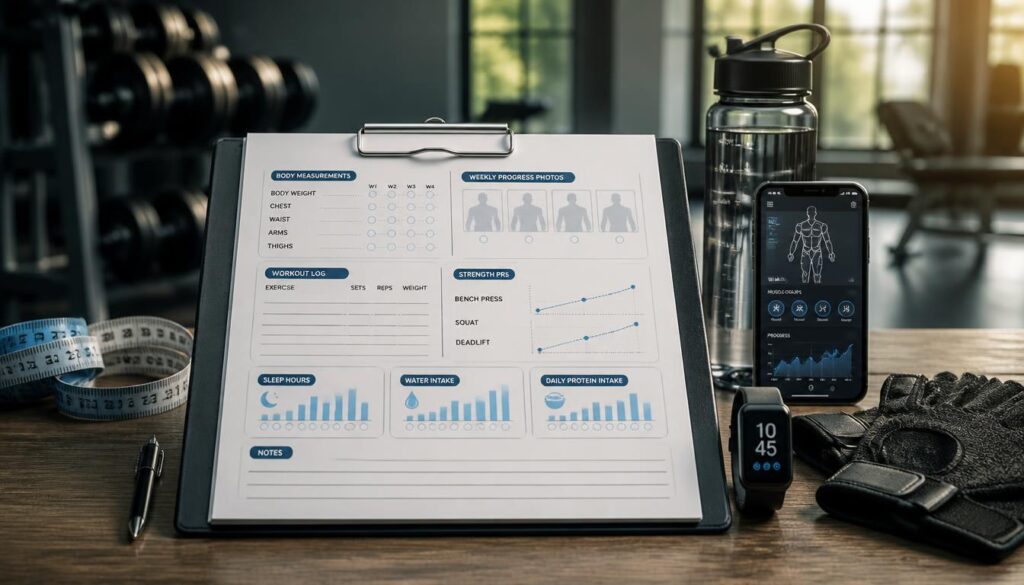
    Muscle-building progress tracker for beginner gym members

    What If Your Weight Isn’t Increasing?

    If you’re intentionally trying to gain weight and your body weight hasn’t changed for several weeks, your current food intake may not be enough to produce a calorie surplus.

    Before dramatically increasing calories, check:

    • Are you actually eating consistently?
    • Are you tracking your food accurately?
    • Are you skipping meals?
    • Has your activity increased?
    • Are you sleeping enough?
    • Are your workouts progressing?

    If everything is consistent and your weight remains stable, a modest increase in food intake may be appropriate.

    Don’t immediately jump to an enormous calorie surplus.

    What If You’re Gaining Weight Too Quickly?

    Fast weight gain isn’t automatically fast muscle gain.

    If your body weight is increasing rapidly and you’re also gaining more body fat than you’d like, your calorie surplus may be larger than necessary.

    A slower, controlled approach can make it easier to manage body composition.

    Remember:

    The goal is not simply to gain weight. The goal is to improve your physique and performance.

    Beginner Muscle Building Supplements

    Supplements can be useful, but they’re not the foundation of muscle growth.

    Before purchasing anything, get your:

    1. Training
    2. Protein intake
    3. Overall diet
    4. Sleep
    5. Recovery

    under control.

    Protein Powder

    Protein powder can be useful when you’re struggling to consume enough protein from normal foods.

    It’s convenience—not magic.

    You can build muscle without it.

    Creatine Monohydrate

    Creatine monohydrate is one of the most extensively researched sports supplements and can improve performance in repeated high-intensity activities and support strength and muscle gains when combined with resistance training.

    A commonly studied maintenance intake is around 3–5 grams per day for healthy adults.

    If you’re under 18, pregnant, have a medical condition, take medications, or have concerns about supplementation, speak with a qualified healthcare professional before using it.

    Caffeine

    Caffeine can improve alertness and exercise performance for some people.

    However, more isn’t better.

    Too much caffeine can interfere with sleep, and poor sleep can undermine your recovery.

    Be particularly careful with high-caffeine energy drinks and pre-workout products.

    Supplement Rule: If your diet, training, and sleep aren’t consistent, buying more supplements probably isn’t the solution.

    Muscle building supplements alongside healthy foods and gym equipment

    Muscle Building Myths Beginners Should Ignore

    The internet is full of fitness claims.

    Let’s separate some common myths from reality.

    Myth 1: “You Need to Train Every Day”

    Reality:
    Muscle growth requires training and recovery. More sessions aren’t automatically better.

    Myth 2: “You Must Eat Huge Amounts of Protein”

    Reality:
    Protein matters, but extremely high intake isn’t necessary for most people.

    Myth 3: “You Need Supplements to Build Muscle”

    Reality:
    A good training program and balanced diet are much more important.

    Myth 4: “You Have to Train Until Failure Every Set”

    Reality:
    You can build muscle without taking every set to complete failure.

    Myth 5: “You Need a Perfect Diet”

    Reality:
    Consistency over time matters more than eating perfectly every day.

    Myth 6: “You Can Build Huge Muscles in 30 Days”

    Reality:
    Meaningful muscle development takes time.

    Myth 7: “Only Men Should Lift Heavy Weights”

    Reality:
    Resistance training can be beneficial for people of different sexes and fitness levels when appropriately programmed.

    Common Muscle-Building Mistakes to Avoid

    Even a good program can fail if your habits work against it.

    1. Changing Exercises Constantly

    If you change your entire workout every week, it becomes difficult to know whether you’re actually progressing.

    2. Copying Advanced Bodybuilders

    An experienced lifter may have years of training behind their routine.

    A beginner needs a different starting point.

    3. Neglecting Legs

    A muscular upper body with poorly developed legs creates an unbalanced physique.

    4. Doing Too Much Cardio

    Cardio is healthy, but excessive endurance work can make recovery and calorie management more challenging for someone prioritizing muscle gain.

    5. Not Eating Enough

    You can’t expect significant weight gain while consistently undereating.

    6. Eating Anything and Everything

    A calorie surplus doesn’t mean you should live on fast food.

    Nutrient quality still matters.

    7. Ignoring Technique

    More weight isn’t useful if you can’t perform the movement properly.

    8. Sleeping Too Little

    Recovery is not optional.

    9. Giving Up Too Early

    Your body won’t transform overnight.

    Give your program enough time to work.

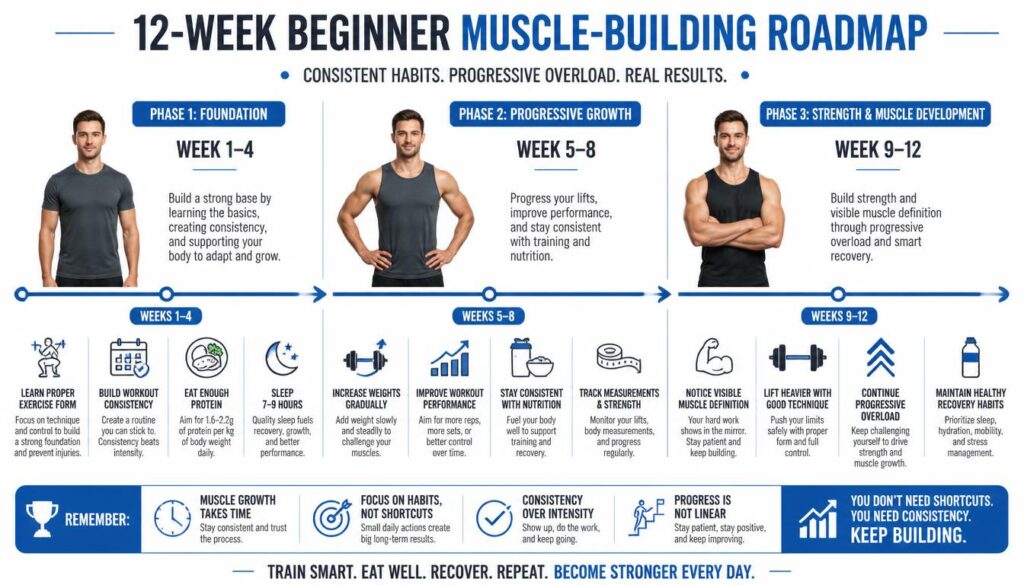
    A Simple 12-Week Muscle-Building Roadmap

    Instead of trying to change everything at once, approach your first three months in stages.

    Weeks 1–4: Learn

    Focus on:

    • Exercise technique
    • Gym confidence
    • Consistent attendance
    • Finding appropriate weights
    • Establishing meal routines
    • Improving sleep

    Don’t worry about lifting huge weights.

    Weeks 5–8: Progress

    Now focus more closely on:

    • Increasing repetitions
    • Gradually increasing resistance
    • Tracking workouts
    • Improving protein intake
    • Maintaining consistency

    Weeks 9–12: Refine

    Evaluate:

    • Strength improvements
    • Body measurements
    • Weight trends
    • Workout consistency
    • Recovery
    • Nutrition

    Then make small adjustments rather than completely changing your routine.

    12-week muscle-building roadmap for beginners

    Beginner Muscle-Building Checklist

    Save this checklist and use it as a simple reference.

    Training

    • ☐ Train consistently
    • ☐ Learn proper exercise form
    • ☐ Train all major muscle groups
    • ☐ Use progressive overload
    • ☐ Track sets, reps, and weight
    • ☐ Avoid unnecessary training volume

    Nutrition

    • ☐ Eat enough protein
    • ☐ Consume sufficient calories for your goal
    • ☐ Include carbohydrates
    • ☐ Include healthy fats
    • ☐ Eat fruits and vegetables
    • ☐ Stay hydrated

    Recovery

    • ☐ Aim for 7–9 hours of sleep
    • ☐ Take appropriate rest days
    • ☐ Manage stress
    • ☐ Avoid training through significant pain

    Progress

    • ☐ Track strength
    • ☐ Track body weight if relevant
    • ☐ Take occasional progress photos
    • ☐ Measure your body periodically
    • ☐ Review your routine every few weeks

    When Should You Get Professional Help?

    A qualified trainer can be particularly useful if you’re completely new to the gym, unsure about exercise technique, or struggling to create a suitable routine.

    You should also speak with an appropriately qualified healthcare professional before beginning a demanding exercise or nutrition program if you have a medical condition, significant injury, symptoms during exercise, or other health concerns.

    Stop exercising and seek appropriate medical evaluation if you experience concerning symptoms such as chest pain, fainting, severe shortness of breath, or sudden severe pain.

    Fitness should improve your health—not put it at unnecessary risk.

    Quick Summary: The Beginner Muscle-Building Blueprint

    Here’s the complete process in simple terms:

    Step 1: Choose a realistic muscle-building goal.

    Step 2: Train consistently 3–4 days per week.

    Step 3: Focus on compound movements and complementary isolation exercises.

    Step 4: Learn proper form.

    Step 5: Use manageable sets and repetitions.

    Step 6: Progress gradually.

    Step 7: Consume enough protein.

    Step 8: Eat enough total calories to support your goal.

    Step 9: Sleep and recover.

    Step 10: Track your progress.

    Step 11: Stay patient.

    Step 12: Adjust your plan based on results.

    That’s the foundation.

    You don’t need a secret program.

    You need to execute the fundamentals consistently.

    Frequently Asked Questions About Building Muscle

    1. How can a beginner start building muscle?

    Start with resistance training 3–4 times per week, learn proper exercise technique, consume enough protein and overall calories, and prioritize recovery. Beginners should focus on consistency and gradual progression rather than immediately using advanced training methods.

    2. How many days a week should a beginner train for muscle gain?

    Three to four resistance-training sessions per week can be an effective starting point. The ideal frequency depends on your schedule, training experience, workout structure, and recovery ability.

    3. How much protein does a beginner need to build muscle?

    A commonly used range for exercising individuals is approximately 1.4–2.0 grams of protein per kilogram of body weight per day. Your individual needs can vary depending on your goals and circumstances.

    4. Can you build muscle without protein powder?

    Yes. Protein powder isn’t necessary for muscle growth. Foods such as eggs, chicken, fish, milk, yogurt, lentils, chickpeas, beans, and meat can provide plenty of protein.

    5. What are the best foods for muscle gain in Pakistan?

    Affordable options include eggs, milk, yogurt, chicken, fish, lean beef, daal, chickpeas, beans, rice, roti, oats, potatoes, peanuts, and other nuts and seeds. A balanced combination can support muscle growth without requiring expensive foods.

    6. How long does it take to see muscle growth?

    The timeline varies significantly. Beginners may notice improvements in strength relatively quickly, while visible changes in muscle size generally require consistent training and nutrition over a longer period.

    7. Do beginners need to bulk to build muscle?

    Not necessarily. A calorie surplus can help support muscle and body-weight gain, but the ideal strategy depends on your current body composition and goals. Some beginners can make significant improvements without deliberately eating a large surplus.

    8. Is it better to lift heavy or do more repetitions?

    Both heavier and lighter loads can contribute to muscle growth when used appropriately. Beginners should prioritize controlled technique, sufficient effort, and progressive improvement rather than obsessing over one particular rep range.

    9. Should I train every muscle every day?

    No. Muscles need recovery after challenging resistance training. A structured routine allows you to train consistently while giving your body appropriate time to recover.

    10. Can I build muscle and lose fat at the same time?

    It can happen, particularly among beginners, people returning to training, and individuals with higher levels of body fat. Results depend on training status, nutrition, body composition, and other individual factors.

    11. Is creatine safe for beginners?

    Creatine monohydrate is well researched and can be useful for healthy adults when used appropriately. However, people with medical conditions, those taking medications, and younger individuals should consult an appropriate healthcare professional before supplementation.

    12. Do I need to train until failure to build muscle?

    No. Training close enough to failure can provide a strong stimulus, but you don’t need to take every set to complete failure. Beginners should especially prioritize good technique and manageable fatigue.

    13. What should I eat after a workout to build muscle?

    A normal balanced meal containing protein and carbohydrates is a good choice. Examples include chicken with rice, eggs with roti, fish with potatoes, or daal with rice and yogurt.

    14. Why am I not gaining muscle even though I work out?

    Possible reasons include insufficient training progression, inadequate protein or calorie intake, poor sleep, inconsistent workouts, poor technique, excessive fatigue, or simply not allowing enough time for results to develop.

    15. What’s the biggest mistake beginners make when trying to build muscle?

    One of the biggest mistakes is trying to progress too quickly. Beginners often lift heavier than they can safely control, change routines constantly, train excessively, or expect rapid transformations. Consistent, gradual progress is a much better strategy.

    Final Thoughts

    Building your first serious amount of muscle doesn’t require you to become a professional bodybuilder.

    You don’t need a kitchen full of supplements.

    You don’t need to spend three hours in the gym every day.

    And you certainly don’t need to follow every fitness trend you see on social media.

    Start with the fundamentals.

    Train consistently. Eat well. Consume enough protein. Progress gradually. Sleep properly. Recover. Repeat.

    Some weeks you’ll feel stronger. Other weeks your progress may seem almost invisible. That’s normal.

    What matters is what happens over months.

    The person who consistently completes sensible workouts for a year will usually make far more progress than the person who follows a “perfect” program for three weeks and quits.

    Your goal isn’t to transform overnight.

    Your goal is to become a little stronger, a little more knowledgeable, and a little more consistent over time.

    Muscle is built through patience. Strength is built through practice. Results are built through consistency.

    Keep Learning With FitnessAdda

    If you want to take the next step, explore these related FitnessAdda guides:

    If you’re ready to begin your fitness journey in Pakistan, FitnessAdda.pk can help you discover gyms, personal trainers, fighting clubs, fitness events, and educational resources to keep moving forward.

    Start where you are.

    Learn the basics.

    Train smart.

    And give yourself enough time to grow.

  • Best Exercises for Muscle Gain Every Beginner Should Try

    Best Exercises for Muscle Gain Every Beginner Should Try

    Walking into a gym for the first time can feel intimidating. You might look at the rows of heavy equipment and wonder where to start your journey. Please know that every person you see lifting heavy weights once stood exactly where you are today.

    Building a stronger physique is a marathon, not a sprint. You will likely see visible changes within 6 to 12 weeks if you stay consistent. By choosing the best exercises for muscle gain, you can make your time in the gym much more productive.

    Best Exercises for Muscle Gain Every Beginner Should Try

    Focusing on effective muscle gain workouts helps you avoid wasting hours on movements that do not serve your goals. When you follow proven strength training routines, you provide your body with the right stimulus to grow. Consistency is the secret ingredient that turns simple effort into real, lasting results.

    Key Takeaways

    • Building a physique requires patience and a consistent schedule.
    • Visible progress typically appears after 6 to 12 weeks of training.
    • Selecting the right movements maximizes your efficiency in the gym.
    • Structured plans prevent wasted time and keep you motivated.
    • Focusing on compound movements builds a solid foundation for growth.

    Understanding the Fundamentals of Muscle Hypertrophy

    Building a stronger physique starts with understanding how your muscles actually grow. At its core, muscular hypertrophy is the biological process where your muscle fibers experience microscopic tears during intense activity. When you rest, your body repairs these fibers, making them thicker and stronger than they were before.

    Choosing the best exercises for muscle gain is the first step in triggering this adaptation. By consistently challenging your body, you create the necessary environment for long-term growth. This process is the foundation of all effective muscle-building exercises.

    The Science of Progressive Overload

    To keep seeing results, you must apply the principle of progressive overload. This means you need to gradually increase the difficulty of your workouts over time. If you lift the same weight for the same number of repetitions every week, your body will eventually stop changing.

    You can achieve this by adding more weight, performing more repetitions, or improving your control during each movement. By constantly pushing your limits, you prevent plateaus and ensure your muscles continue to adapt. This is a vital component of any routine focused on hypertrophy exercises.

    Why Compound Movements Are Essential for Beginners

    For those just starting their fitness journey, compound movements are the most efficient way to train. These exercises involve multiple joints and muscle groups working together at the same time. Because they recruit more muscle mass, they provide a greater stimulus for growth compared to isolation movements.

    Incorporating these muscle-building exercises into your routine allows you to build a solid foundation of strength quickly. They teach your body how to move as a single, coordinated unit. Focusing on these movements is widely considered one of the best exercises for muscle gain for anyone new to the gym.

    The King of Lower Body Strength: The Barbell Squat

    The barbell squat stands alone as the ultimate test of lower body power and stability. It is widely regarded as one of the most effective muscle-building exercises because it recruits multiple muscle groups simultaneously. By engaging your quads, hamstrings, glutes, and core, this movement creates a powerful stimulus for growth.

    Proper Form and Technique for Beginners

    To get the most out of your muscle growth workouts, you must prioritize your mechanics before adding heavy weight. Start by placing the barbell across your upper traps, keeping your feet shoulder-width apart. As you descend, push your hips back as if sitting into an invisible chair, ensuring your chest remains upright.

    For optimal hypertrophy, aim for 3-4 sets of 8-12 reps. Consistency in your range of motion is the key to long-term success. Remember these essential cues:

    • Keep your weight distributed evenly across your entire foot.
    • Maintain a neutral spine throughout the entire movement.
    • Drive through your heels to return to the starting position.

    “The squat is the perfect analogy for life; it’s about getting back up after something heavy weighs you down.”

    Unknown

    Common Mistakes to Avoid During Squats

    Even among the top exercises for building muscle, the squat can be dangerous if performed incorrectly. Many beginners struggle with depth, often cutting their reps short to avoid the challenge of the bottom position. Always aim to reach at least parallel, where your hip crease drops below your knee.

    Another frequent error is allowing the knees to cave inward, which places unnecessary stress on your joints. Focus on pushing your knees outward to maintain stability and protect your ligaments. Finally, avoid rounding your lower back, as this compromises your spine and shifts the focus away from your target muscles.

    Building a Powerful Back with Deadlifts

    The deadlift stands as a pillar among the most effective muscle-building exercises. This movement is not just about lifting heavy weight; it is about building a foundation of raw, functional strength that translates to every other area of your training.

    The Benefits of Conventional Deadlifts

    Conventional deadlifts are essential for anyone serious about muscle growth workouts. By engaging the entire posterior chain, this lift targets your back, glutes, and hamstrings simultaneously. It is one of the few movements that forces your body to work as a single, cohesive unit.

    When you perform this lift, you stimulate significant hormonal responses that aid in overall hypertrophy. Because it recruits so many muscle fibers, it remains one of the top exercises for building muscle in the entire body.

    Muscle GroupPrimary BenefitGrowth Potential
    Erector SpinaeSpinal StabilityHigh
    Gluteus MaximusPower OutputVery High
    HamstringsLeg DriveHigh

    Safety Tips for Protecting Your Lower Back

    While the deadlift is powerful, you must prioritize safety to ensure long-term progress. Always maintain a neutral spine throughout the entire range of motion to prevent unnecessary strain on your vertebrae.

    “Strength does not come from physical capacity. It comes from an indomitable will.”

    — Mahatma Gandhi

    Proper bracing is your best defense against injury. Before you initiate the pull, take a deep breath into your abdomen and tighten your core muscles as if you are preparing for a punch. This creates internal pressure that stabilizes your spine and allows you to lift with confidence.

    Remember to keep the barbell close to your shins during the ascent. If the bar drifts away from your body, the leverage shifts, placing excessive stress on your lower back. Focus on perfecting your form before adding significant weight to the bar.

    Developing Upper Body Mass with Bench Presses

    Mastering the bench press is a rite of passage for anyone serious about muscle development exercises. This movement serves as the gold standard for building a thick, powerful chest, shoulders, and triceps. By utilizing free weights, you force your body to recruit stabilizing muscles that machines simply cannot activate.

    Muscle development exercises

    Mastering the Flat Barbell Bench Press

    To perform the movement safely, start by lying flat on the bench with your feet planted firmly on the floor. Maintain a slight arch in your lower back while keeping your shoulder blades retracted and pinned against the pad. This position creates a stable foundation for your press.

    Lower the bar slowly to your mid-chest, keeping your elbows tucked at a slight angle rather than flared out. Once the bar touches your chest, drive it upward with explosive power while exhaling. Focus on these key technical cues to ensure progress:

    • Keep your core tight throughout the entire repetition.
    • Ensure your wrists remain straight to avoid unnecessary strain.
    • Control the descent to maximize time under tension.

    Variations for Different Muscle Focus

    Incorporating variety into your muscle growth workouts allows you to target specific muscle fibers for a more aesthetic look. Changing your grip or the angle of the bench shifts the emphasis to different areas of your upper body. These adjustments help prevent plateaus and ensure balanced development.

    For instance, an incline bench press shifts the focus toward your upper chest and front deltoids. Conversely, a close-grip bench press places more demand on your triceps, which is essential for overall arm size. These are widely considered among the top exercises for building muscle because they allow for heavy loading and consistent progression. Consistency is the secret to unlocking your full potential in the gym.

    Shoulder Development Through Overhead Pressing

    Few movements challenge your shoulder stability and strength quite like the overhead press. This vertical pushing pattern is one of the most effective muscle development exercises for building broad, powerful deltoids. By moving weight from your shoulders to a locked-out position overhead, you force your upper body to work in unison.

    Standing Versus Seated Overhead Press

    Choosing between a standing or seated variation depends on your specific training goals. The standing press requires significant full-body coordination, as you must balance the weight while keeping your torso upright. This version is excellent for functional strength and total body integration.

    Conversely, the seated press removes the legs from the equation, allowing you to isolate the shoulders more effectively. Because the bench provides back support, you can often push heavier loads with less risk of lower back strain. Both variations are staples in resistance training for muscle gain, so consider rotating them to keep your progress moving forward.

    Engaging Your Core for Stability

    Proper core engagement is the secret to a safe and successful overhead press. Before you initiate the upward drive, take a deep breath into your abdomen and brace your core as if you are preparing for a punch. This creates internal pressure that protects your spine under heavy loads.

    Remember that progressive overload is key to long-term growth. You should aim to increase your weight, repetitions, or intensity over time to avoid plateaus. By mastering your bracing technique, you ensure that your muscle development exercises remain safe while you continue to push your limits in the gym.

    The Best Exercises for Muscle Gain Using Bodyweight

    Mastering your own body is the ultimate test of strength and control. You do not always need heavy gym equipment to build significant muscle, as bodyweight movements offer a versatile and effective alternative. These best exercises for muscle gain are perfect for beginners who want to build a solid foundation of strength at home or in the gym.

    Mastering the Pull-Up for Back Width

    The pull-up is widely considered one of the most effective hypertrophy exercises for developing a wide, V-tapered back. By gripping the bar with your palms facing away, you engage your latissimus dorsi muscles through a full range of motion. If you are just starting, focus on controlled negatives or use a resistance band to assist your ascent.

    Consistency is key when learning this movement. As you get stronger, try to increase your volume by adding one extra repetition each week. This progressive approach ensures your muscles continue to adapt and grow over time.

    Perfecting the Push-Up for Chest and Triceps

    The push-up remains a staple for building upper-body mass because it targets the chest, shoulders, and triceps simultaneously. To maximize your results, keep your core tight and your body in a straight line from head to heels. Proper form is essential to ensure you are stimulating the target muscle groups rather than relying on momentum.

    If standard push-ups become too easy, you can scale the difficulty by elevating your feet or slowing down the tempo of each repetition. By focusing on the eccentric phase, or the lowering portion of the movement, you create more mechanical tension. This simple adjustment makes bodyweight training a powerful tool for anyone seeking consistent muscle growth.

    Targeting the Posterior Chain with Lunges

    Incorporating unilateral movements like lunges is a game-changer for your fitness journey. These movements are highly effective hypertrophy exercises that specifically target your glutes, hamstrings, and quadriceps. By training one leg at a time, you force your body to work harder to maintain stability.

    Why Lunges Improve Balance and Symmetry

    Many beginners struggle with strength imbalances where one side of the body is naturally stronger than the other. Lunges act as a corrective tool, ensuring that both legs receive equal stimulus during your workouts. Achieving true symmetry requires you to address these weak points directly.

    Beyond muscle growth, lunges significantly enhance your core stability and coordination. Because you must balance your entire body weight on a single leg, your stabilizer muscles are constantly engaged. This functional benefit translates well into everyday activities and other athletic movements.

    Weighted Versus Unweighted Variations

    If you are just starting, begin with unweighted bodyweight lunges to master your form. Focus on keeping your torso upright and ensuring your front knee stays aligned with your ankle. Once you feel confident, you can introduce external resistance to continue your resistance training for muscle gain.

    You can progress by holding dumbbells at your sides or a barbell across your shoulders. Adding weight increases the mechanical tension on your muscles, which is vital for long-term growth. Always prioritize perfect technique over the amount of weight you lift to stay safe and effective.

    Incorporating Rows for a Thick and Wide Back

    A wide, thick back is the ultimate sign of a strong physique. To achieve this, you must prioritize muscle development exercises that target the lats, rhomboids, and traps. Rows serve as the foundation for building a powerful posterior frame.

    Muscle development exercises

    Bent-Over Barbell Rows Explained

    The bent-over barbell row is a classic movement that allows for heavy loading. By hinging at the hips and pulling the bar toward your lower chest, you recruit significant muscle fibers across your entire back. This exercise is a staple in resistance training for muscle gain because it forces your core to stabilize while your back muscles perform the heavy lifting.

    Focus on keeping your spine neutral throughout the movement to ensure safety. Pull the weight with intent, squeezing your shoulder blades together at the top of the rep. This controlled contraction is key to maximizing growth.

    Utilizing Cable Rows for Constant Tension

    While free weights are excellent for raw strength, cable rows offer a unique advantage. The cable system maintains constant tension on your muscles throughout the entire range of motion. This prevents the “rest” periods that can occur at the bottom of a barbell row.

    You can adjust your grip and handle attachments to target different areas of the back. Using a wide bar can emphasize width, while a close-grip handle helps build thickness in the middle back. Incorporating these variations ensures comprehensive development.

    Exercise TypePrimary BenefitMuscle FocusEquipment
    Bent-Over RowHeavy LoadingOverall Back MassBarbell
    Seated Cable RowConstant TensionMid-Back ThicknessCable Machine
    Single-Arm RowUnilateral BalanceLat DevelopmentDumbbell

    Structuring Your Weekly Strength Training Routine

    If you want to see real results, you need to move beyond random workouts and embrace a structured routine. A well-organized plan turns individual movements into a cohesive path toward your fitness goals. By following effective muscle gain workouts, you ensure that your time in the gym is never wasted.

    Balancing Volume and Recovery

    To maximize growth, aim for a schedule that includes three to six days of activity per week. This frequency allows you to hit each major muscle group at least twice, which is ideal for stimulating consistent hypertrophy. You must remember that muscle is built during rest, not just while lifting.

    Finding the right balance between intensity and downtime is crucial for long-term success. If you train too hard without enough recovery, your progress will stall. Always listen to your body and prioritize sleep and nutrition to support your strength training routines.

    How to Track Your Progress Effectively

    Tracking your performance is the only way to guarantee that you are applying progressive overload. You should keep a detailed log of every session, including the specific weights, sets, and repetitions you complete. This data acts as a roadmap for your future gains.

    When you look back at your notes, you can easily see where you need to increase the challenge. Small, incremental improvements in your strength training routines lead to significant changes over time. By staying disciplined with your records, you turn effective muscle gain workouts into a reliable system for building a stronger, more muscular physique.

    Conclusion

    Building a stronger body is a rewarding journey that demands patience and a steady commitment to your goals. You now possess the knowledge to implement effective muscle gain workouts that target every major muscle group. Success relies on your ability to stay consistent with your training plan over the long term.

    Integrating proven strength training routines into your weekly schedule creates the foundation for lasting physical change. Focus on the quality of your movement patterns rather than just the weight on the bar. Small improvements made during each session accumulate into significant results over time.

    Keep a detailed log of your lifts to monitor your growth and adjust your intensity as needed. Proper nutrition and adequate rest remain vital components of your overall success. Your dedication to these principles will define the speed and quality of your transformation.

    Begin your path toward a more powerful physique today. Track your personal records, stay focused on your long-term vision, and enjoy the process of becoming a stronger version of yourself. Your commitment to these habits will yield the results you desire.

    FAQ

    The Science of Progressive Overload

    To keep your progress from stalling, you must implement progressive overload. This means consistently challenging your body by increasing the weight, adding more repetitions, or shortening rest periods. Organizations like the National Academy of Sports Medicine (NASM) emphasize that without this constant challenge, your muscles have no reason to grow further.

    Why Compound Movements Are Essential for Beginners

    For those just starting out, compound movements are the most efficient way to stimulate growth. These exercises, such as those performed with Rogue Fitness equipment, involve multiple joints and muscle groups working in unison. By focusing on these, beginners can maximize their time in the gym and build a solid foundation of functional strength.The barbell squat is widely considered the gold standard of muscle-building exercises for the lower body. Because it recruits a massive amount of muscle mass—including the quads, hamstrings, and glutes—it triggers a significant hormonal response conducive to growth.

    Proper Form and Technique for Beginners

    Mastering the squat requires a focus on depth and stability. Keep your chest up, your back flat, and ensure your knees track over your toes. High-performance coaches at Gold’s Gym often recommend starting with just the bar to perfect your movement pattern before adding heavy plates.

    Common Mistakes to Avoid During Squats

    One of the most frequent errors is “ego lifting,” which leads to shallow depth or a rounded back. Both mistakes can hinder your progress and increase the risk of injury. Prioritizing proper form ensures you are actually targeting the intended muscles for maximum hypertrophy.Deadlifts are a fundamental part of any effective muscle gain workouts. This movement targets the entire posterior chain, helping you build a thick, powerful back and strong glutes.

    The Benefits of Conventional Deadlifts

    The conventional deadlift is a powerhouse for building total-body strength. By pulling weight directly from the floor, you engage your grip, lats, and legs simultaneously, making it one of the top exercises for building muscle mass quickly.

    Safety Tips for Protecting Your Lower Back

    Safety is paramount when deadlifting. You must maintain a neutral spine and use proper bracing techniques—similar to those taught by Starting Strength coaches—to protect your vertebrae. Engaging your core and “pulling the slack” out of the bar helps stabilize the lift.The bench press is the most iconic movement for developing the chest, shoulders, and triceps. It is a staple in most muscle growth workouts due to its ability to handle heavy loads.

    Mastering the Flat Barbell Bench Press

    To maximize power, tuck your shoulder blades back and down and maintain a slight arch in your lower back. This position provides a stable platform to push from, allowing you to move more weight safely using Hammer Strength or standard barbell racks.

    Variations for Different Muscle Focus

    While the flat bench is great for overall mass, variations like the incline press target the upper chest, while the close-grip press places more emphasis on the triceps. Using these variations helps create a balanced and aesthetic physique.Broad shoulders are a hallmark of a well-developed upper body. The overhead press is the primary tool for building the deltoids and improving overhead stability.

    Standing Versus Seated Overhead Press

    While the seated press allows you to lift heavier by removing leg involvement, the standing version requires significant core engagement. Many athletes prefer the standing press for its ability to improve overall resistance training for muscle gain and functional balance.

    Engaging Your Core for Stability

    When pushing heavy weight overhead, your core acts as a bridge between your upper and lower body. Bracing your abdominals prevents your back from over-arching, ensuring the stress stays on your shoulders where it belongs.You don’t always need a fully equipped gym to see results. Bodyweight exercises are versatile and highly effective for building a foundation of strength.

    Mastering the Pull-Up for Back Width

    The pull-up is an elite movement for building back width and bicep strength. If you cannot perform a full pull-up yet, using TRX suspension trainers or resistance bands can help you build the necessary strength to eventually move your own body weight.

    Perfecting the Push-Up for Chest and Triceps

    Push-ups are a fundamental hypertrophy exercise that can be done anywhere. By focusing on a full range of motion—touching your chest to the floor—you maximize the engagement of your pectoral muscles and triceps.Lunges are a critical unilateral exercise, meaning they work one leg at a time. This is vital for ensuring your lower body grows evenly.

    Why Lunges Improve Balance and Symmetry

    Most people have one leg stronger than the other. Lunges force each leg to carry the load independently, which corrects these imbalances and improves your performance in larger lifts like the squat.

    Weighted Versus Unweighted Variations

    Beginners should start with unweighted lunges to master the balance. Once comfortable, holding Bowflex adjustable dumbbells or a kettlebell can increase the intensity and further stimulate muscle growth.While pull-ups focus on width, rowing movements focus on the thickness of the middle and upper back.

    Bent-Over Barbell Rows Explained

    The bent-over row is a powerhouse for building the lats and rhomboids. It requires a strong core to hold the hinged position, making it a true full-body effort that fits perfectly into strength training routines.

    Utilizing Cable Rows for Constant Tension

    Cable rows, often performed on Life Fitness machines, offer the advantage of constant tension. Unlike free weights, where the resistance can vary throughout the move, cables keep the muscle working hard from the stretch all the way to the contraction.Individual exercises are only as good as the program they are placed in. A successful routine must balance hard work with recovery.

    Balancing Volume and Recovery

    To optimize growth, aim to hit each muscle group at least twice a week. This ensures a high frequency of protein synthesis while still allowing time for the microscopic tears to heal.

    How to Track Your Progress Effectively

    Logging your workouts in an app like Strong or a simple notebook is essential. Recording your weights and repetitions allows you to verify that you are actually achieving progressive overload week after week.

    How long does it take to see results from these muscle-building exercises?

    Most beginners will notice strength gains within the first 2 to 4 weeks, while visible muscle growth typically takes 8 to 12 weeks of consistent strength training routines and proper nutrition.

    Can I achieve a great physique using only bodyweight muscle growth workouts?

    Yes! By using advanced variations of pull-ups, push-ups, and dips, you can build significant mass. However, eventually, you may want to incorporate resistance training for muscle gain with external weights to continue the progressive overload process.

    What are the most effective muscle gain workouts for someone with a busy schedule?

    Focus on “Full Body” sessions three times a week. By prioritizing the top exercises for building muscle—like squats, deadlifts, and presses—you can stimulate all major muscle groups in a single hour-long session.

    Why are compound movements prioritized over isolation moves in muscle development exercises?

    Compound movements allow you to lift heavier weights and recruit more muscle fibers simultaneously. This creates a greater overall stimulus for growth compared to isolation exercises like bicep curls or leg extensions.

    How do I know if I am using the right weight for hypertrophy exercises?

    A general rule for muscle growth workouts is to choose a weight that allows you to complete 8 to 12 repetitions with good form, where the last two reps are challenging but still technically sound.

    Is it necessary to go to a specialized gym like Gold’s Gym to get results?

    While a well-equipped gym helps, you can perform the best exercises for muscle gain anywhere you have access to basic equipment like a barbell or dumbbells. Consistency and effort are more important than the brand of the gym.

  • How to Build Muscle Naturally for Lasting Results

    How to Build Muscle Naturally for Lasting Results

    Many people dream of having a strong, toned body. They work hard to show off their dedication to fitness. But it’s not just about lifting heavy weights. It’s about living a healthy lifestyle for the long run.

    How to Build Muscle Naturally

    Looking for quick fixes is common, but real strength comes from steady habits. Learning how to build muscle naturally helps you build a strong body without artificial help. By eating right, resting well, and training smart, you can reach your full potential. Embrace this path for lasting results and high energy for years.

    Key Takeaways

    • Prioritize consistent, progressive resistance training for steady growth.
    • Fuel your body with whole, nutrient-dense foods to support recovery.
    • Understand that patience is the most important tool in your fitness arsenal.
    • Focus on quality sleep to allow your tissues to repair and strengthen.
    • Avoid synthetic shortcuts that compromise your long-term health and hormonal balance.

    The Philosophy of Natural Muscle Growth

    Starting a natural fitness journey changes how you see your body. It’s not just about lifting weights; it’s about growing strong in a lasting way. This path requires discipline and biology to work together.

    Understanding Your Body’s Potential

    Everyone has a unique genetic makeup that affects how they grow. Learning how to build muscle naturally means accepting this. It’s about focusing on your own growth, not comparing to others.

    Success comes from training and recovery. Respecting your body’s limits leads to lasting growth. This way, your gains stay with you forever.

    The Importance of Consistency and Patience

    The best natural muscle-building tips are simple. Showing up to the gym, even when you don’t feel like it, is key. Patience helps your body adapt to new challenges.

    Many athletes fail because they want quick results. A long-term plan lets your body build strong, lasting muscle. Every workout builds your future self.

    Mindset FactorShort-Term FocusLong-Term Philosophy
    Training GoalImmediate PumpProgressive Strength
    Recovery ViewOptional RestEssential Growth
    ExpectationsRapid ChangesSustainable Evolution
    Success MetricScale WeightBody Composition

    The philosophy of natural training is about longevity. With dedication, you’ll learn to build muscle naturally and stay healthy for years.

    How to Build Muscle Naturally Through Progressive Overload

    Building a strong body is more than just going to the gym. It needs a smart plan for progressive overload. This method is key for growing muscles and keeping them strong. By pushing your body harder, you help it grow using natural muscle-building tips.

    Mastering Compound Movements

    Compound movements are the core of a good workout plan. Squats, deadlifts, and overhead presses work many muscles at once. They are the best exercises for natural muscle growth because they let you lift heavy safely.

    “The iron never lies to you. You can walk outside and listen to all kinds of talk, but the iron will always tell you the truth.”

    — Henry Rollins

    The Science of Hypertrophy

    Hypertrophy happens when you lift weights that are too heavy for your muscles. This causes tiny tears in the fibers. Your body then makes these fibers thicker and stronger for the next time.

    Using the right muscle gain techniques keeps this process going without stopping.

    Adjusting Volume and Intensity

    To keep getting better, you need to balance how much you do and how hard you do it. You can lift more, do more reps, or rest less. Here’s how to change these things for the best results.

    VariableGoalEffect
    IntensityIncrease WeightBoosts Mechanical Tension
    VolumeIncrease Sets/RepsEnhances Metabolic Stress
    RestDecrease TimeImproves Work Capacity

    By tweaking these factors, you avoid overtraining and get the most out of your workouts. Consistency is the bridge to reaching your fitness goals. Focus on the journey, and your body will grow naturally and steadily.

    Optimizing Your Nutrition for Lean Gains

    Good nutrition is key for muscle recovery and growth after workouts. By focusing on muscle gain techniques that use quality food, your body fixes muscle damage instead of storing fat. This makes your kitchen a place for changing your body.

    A visually appealing kitchen scene representing "natural muscle-building nutrition" for lean gains. In the foreground, a rustic wooden table displays an array of fresh, vibrant foods: lean chicken breast, quinoa, leafy greens, nuts, and colorful vegetables, artfully arranged. In the middle, a stylish glass jar filled with protein-rich smoothie or shake sits beside a cutting board with chopped ingredients. The background features a sunny window illuminating the scene, casting warm light. The atmosphere conveys an inviting, healthy lifestyle, emphasizing nutrition as essential for lasting muscle growth. Include a subtle watermark with the brand name "Fitness Adda" in the corner, ensuring it remains unobtrusive and professional. The lens captures the scene in a crisp, inviting focus, evoking a sense of energy and motivation.

    Calculating Your Macronutrient Needs

    To build lean muscle naturally, you need to know about proteins, carbs, and fats. First, figure out how many calories you burn each day. Then, add a bit more to support muscle growth.

    Protein is most important for fixing muscle damage. Carbs give you energy for workouts, and healthy fats help with hormones. Here’s a simple guide for your daily food:

    MacronutrientRole in GrowthRecommended Source
    ProteinMuscle RepairChicken, Tofu, Eggs
    CarbohydratesTraining EnergyOats, Rice, Sweet Potatoes
    Healthy FatsHormonal BalanceAvocado, Nuts, Olive Oil

    The Role of Whole Foods in Muscle Recovery

    Whole foods give you the nutrients and fiber you need for health and recovery. Avoiding processed foods helps prevent inflammation and supports your goals. Eating foods rich in nutrients helps your body grow muscle naturally.

    Eat lots of colorful veggies, lean meats, and whole grains to keep your energy up. These foods have vitamins that help your muscles grow. Sticking to the same healthy foods will give you better results than any quick diet.

    Timing Your Protein Intake

    Timing your protein intake is crucial for muscle recovery. Eating a high-quality protein within two hours of working out helps a lot. Spread your protein across several meals to keep your muscles supplied with amino acids.

    Leveraging Expert Guidance at fitnessadda.pk

    Expert guidance is key for those aiming to build lean muscle naturally. Hard work is important, but a clear plan helps avoid wasted effort. It keeps you on track towards your long-term goals.

    A well-defined fitness coach demonstrating natural muscle-building techniques in a bright, inviting gym setting for Fitness Adda. In the foreground, the coach, clad in professional athletic wear, is showing proper form while demonstrating a dumbbell exercise, highlighting muscle engagement. The middle ground features an array of weights and fitness equipment, with workout posters displaying muscle anatomy and nutrition tips subtly in the background, creating an inspiring environment. Soft, natural lighting floods through large windows, emphasizing the coach's focused expression and the sleek design of the gym. The atmosphere is energetic and motivational, encouraging viewers to embrace a healthy lifestyle while working towards lasting results in muscle development.

    Finding the Right Trainer for Your Goals

    Everyone’s journey to a stronger body is different. At fitnessadda.pk, you can find elite trainers who meet your needs. They assess your fitness level to create a plan for steady progress.

    “The only way to do great work is to love what you do. If you haven’t found it yet, keep looking. Don’t settle.”

    — Steve Jobs

    Why Professional Experience Matters

    Working with an experienced trainer can greatly speed up your progress. They use their years of knowledge to spot and avoid obstacles. This helps you build lean muscle safely and effectively.

    Connecting with Mentors in the Fitness Community

    Finding a mentor adds accountability to your fitness journey. The community at fitnessadda.pk is a place where athletes share knowledge. Mentors offer insights that make the process of building lean muscle naturally rewarding and transformative.

    Selecting the Best Environment for Your Training

    Your training environment is key to your physical change. The place you train affects your motivation and how often you work out. A space that matches your goals can unlock your full potential.

    A well-lit gym environment filled with athletes engaged in various exercises that promote natural muscle growth. In the foreground, a diverse group of three individuals (one male, one female, one non-binary) performs bodyweight exercises like push-ups and squats, all in professional athletic wear. In the middle, weights and resistance bands are neatly arranged, highlighting the importance of functional training equipment. The background features a large window with natural sunlight streaming in, illuminating the space and creating a warm, inviting atmosphere. The overall mood is energetic and motivating, promoting focus and determination. Emphasize a clean, modern design reflecting the brand name "Fitness Adda," capturing the essence of a supportive training environment.

    Choosing Between Local Gyms and Specialized Facilities

    Local gyms offer a friendly community that keeps you on track. They are great for those who want easy access and lots of equipment. You can learn new ways to build muscle from others.

    Specialized facilities, however, have top-notch gear for specific goals. They have advanced tools for precise workouts. The right place gives you the tools to safely challenge yourself.

    Exploring Fighting Clubs for Functional Strength

    Fighting clubs are perfect for building real-world strength. They focus on functional strength, which is useful in everyday life. Training here makes your body adapt in ways regular workouts can’t.

    Training in these clubs is intense and can change your progress. You’ll learn to move with purpose, making every workout count. It’s an exhilarating way to push your limits and improve your body.

    Utilizing fitnessadda.pk to Locate Top-Tier Facilities

    Finding the right gym or club is easy with fitnessadda.pk. This platform helps you find top training centers near you. It lets you focus on the best exercises for natural muscle growth.

    Whether you need a gym for powerlifting or a martial arts studio, it’s just a few clicks away. Choose your environment wisely for long-term success. Your effort to find the right place will show in every workout.

    Essential Recovery Techniques for Sustainable Growth

    Many athletes focus too much on how hard they train. They forget that growth happens when they rest. Embracing this downtime is key to lasting success.

    A serene, well-lit gym space showcasing natural methods to increase muscle mass. In the foreground, a professional trainer in modest athletic wear demonstrates stretching techniques on a yoga mat, promoting recovery. To the left, a wooden table displays healthy post-workout snacks: nuts, fruits, and protein shakes, emphasizing nutrition. In the middle ground, gym equipment is neatly organized with plants nearby, adding a calming atmosphere. The background features large windows allowing soft, natural light to flood the room, enhancing a sense of tranquility and focus. Include subtle branding for "Fitness Adda" on a wall in the background, harmonizing with the overall theme of sustainable growth and recovery techniques. The image is captured with a wide-angle lens to encompass the entire environment, creating an inviting and motivational space that inspires fitness enthusiasts.

    Prioritizing Sleep and Hormonal Balance

    Quality sleep boosts your body’s performance. It’s when your body releases hormones that help repair and grow muscles. This is a powerful natural way to increase muscle mass.

    Keeping your hormones in balance is more than just sleeping. It also means having a regular schedule. Getting seven to nine hours of sleep helps keep your cortisol levels stable. This prevents muscle loss. Consistency in your sleep habits beats any supplement.

    Active Recovery and Mobility Work

    You don’t have to sit still to recover. Light activities like walking, swimming, or yoga help your muscles. They increase blood flow and reduce inflammation. This makes it a great effective muscle-building method for the long term.

    Mobility work keeps your joints healthy and your movements smooth. Spending time on stretching and foam rolling makes your body more resilient. These simple yet transformative habits help you stay at your best for years.

    Tracking Progress and Celebrating Success

    You can’t improve what you don’t track, especially when building muscle naturally. Keeping a detailed record of your daily lifts, body measurements, and nutrition helps you see what works best for you. This way, you can focus on the effective muscle-building methods that suit your body.

    This method removes the guesswork from your workouts. It lets you make small, meaningful adjustments that lead to big gains over time.

    Documenting Your Journey on fitnessadda.pk

    Consistency is key for any physical change. You can easily track your journey and share your success stories on fitnessadda.pk. This keeps you focused on your goals.

    Using this platform helps you stay strictly accountable and track your growth clearly. Seeing your progress in writing makes it easier to stay motivated, even when it gets tough.

    Sharing Success Stories to Inspire Others

    Your achievements are more than just numbers; they show that hard work pays off. Sharing these with the fitnessadda.pk community spreads positivity.

    By sharing your results, you give others valuable insights into effective muscle-building methods. This inspires your peers and strengthens your own commitment to natural bodybuilding.

    Staying Motivated Through Fitness Events

    Building muscle is more than just working out. It’s about connecting with others. When you join fitness events, you find a holistic muscle-building approach that boosts your mood. These events help keep your motivation up during long training periods.

    Participating in Local Challenges

    Local fitness challenges are great for testing your limits. They offer a supportive environment to improve your skills. Competition in these events makes you focus on your goals with more energy.

    “The strength of the group is the strength of the individual. When we train together, we rise together.”

    Networking with Like-Minded Athletes

    Meeting others who are as dedicated to fitness is key. You can swap tips, discuss diets, and find people to hold you accountable. These connections make reaching your goals more fun.

    • Share effective recovery methods with experienced lifters.
    • Find training partners who match your intensity levels.
    • Learn new, safe techniques to enhance your performance.

    Finding Upcoming Events on fitnessadda.pk

    Keeping up with fitness events is easy with the right tools. Check out fitnessadda.pk for the latest events. This way, your holistic muscle-building approach stays supported by a lively community.

    Common Pitfalls to Avoid in Natural Bodybuilding

    Building a strong body naturally takes time. It’s not a quick fix. Many beginners try too hard every day, which can harm their progress. It’s key to mix natural muscle-building nutrition with smart training.

    Avoiding Overtraining Syndrome

    Overtraining syndrome can stop your progress without you even noticing. It makes you tired and more likely to get hurt. True growth happens during rest, not just when lifting.

    Listen to your body. If you’re always tired or unmotivated, it’s a sign to slow down. Good nutrition and rest help your muscles grow. Remember, rest is part of your training, not a weakness.

    Steering Clear of Unrealistic Expectations

    It’s easy to feel down when you compare yourself to social media. Sustainable results take time. The best changes happen over months and years of hard work.

    Focus on your own journey. This keeps your progress steady and natural. By not chasing quick success, you enjoy the journey to becoming your best self. Patience is your greatest asset for lasting results.

    Holistic Approaches to Long-Term Muscle Maintenance

    True fitness is a lifelong journey, not a quick race. It requires a new way of thinking. To keep your muscles strong for years, treat your body and mind as one. This approach keeps you focused, even when life gets tough.

    Integrating Mindset and Physical Training

    Building strength is just half the battle for lasting fitness. You also need mental fortitude to keep going when you feel tired or unmotivated. By linking your mental goals with your workout routine, you build a lasting path.

    “Success is the sum of small efforts, repeated day in and day out.”

    Robert Collier

    A holistic muscle-building approach means listening to your body, not just following a plan. Seeing workouts as self-care boosts your consistency. This mindset helps you avoid burnout over time.

    Adapting Your Routine as You Age

    As you get older, your body changes. You can’t train as hard as you did in your youth. Instead, focus on smart training that keeps your joints healthy and your muscles strong.

    Here are some tips to keep your progress:

    • Prioritize recovery: Take more rest days to balance your hormones.
    • Adjust volume: Choose quality over quantity in your workouts.
    • Mobility work: Stretch daily to keep your joints flexible.

    By fine-tuning your holistic muscle-building approach, you keep your body strong and flexible. Adapting your routine shows wisdom, not weakness. Stay dedicated, and your body will thank you with lasting health.

    Conclusion

    Building muscle naturally is a big step towards better health and fitness. It needs smart training, good nutrition, and rest. Every workout brings you closer to your fitness dreams.

    fitnessadda.pk gives you the tools to succeed. It connects you with expert trainers and helps find the best gyms. Using digital tools to track your progress keeps you on track.

    Believe in the process as you go on your fitness journey. Your effort leads to lasting results that go beyond the gym. Start the challenge today and see the strength you gain through hard work.

    FAQ

    How can I start building lean muscle naturally without relying on synthetic enhancements?

    To build muscle naturally, focus on three key areas. First, use progressive overload to challenge your muscles. Second, eat nutrient-dense foods to fuel your body. Lastly, make sure to recover well. These steps will help you reach your full muscle-building potential.

    What are the best exercises for natural muscle growth to include in my routine?

    For natural muscle growth, choose compound exercises. These include squats, deadlifts, bench presses, and pull-ups. They work multiple muscles at once, helping you lift heavy and build lean muscle.

    How can I find expert guidance for specific muscle gain techniques?

    Finding the right guidance can be tough. On fitnessadda.pk, you can meet experienced trainers. They offer personalized tips and techniques to help you build muscle safely and effectively.

    What are some natural ways to increase muscle mass through diet?

    Nutrition is key for muscle growth. Eat a bit more than you burn, focusing on whole foods, lean proteins, and healthy fats. Knowing your macronutrient needs and timing your protein intake can boost muscle growth.

    Why is consistency more important than intensity when learning how to build muscle naturally?

    Building muscle naturally is a long-term effort. While intensity is important, consistency keeps your body adapting. A long-term plan and tips from fitnessadda.pk help you stay on track and avoid burnout.

    How do I choose the right facility to support my natural bodybuilding journey?

    Your environment greatly affects your success. Use fitnessadda.pk to find gyms or clubs that fit your needs. The right place has the right equipment and a supportive community to keep you motivated.

    What role does recovery play in a holistic muscle-building approach?

    Recovery is crucial for muscle growth. It’s when your body repairs and grows muscle. Adequate sleep, active recovery, and mobility work are essential. They keep your hormones balanced and prevent overtraining.

    How can I stay motivated and track my progress over time?

    Keeping a record of your progress is important. Share your journey on fitnessadda.pk to stay accountable. Fitness events and networking with others also provide the motivation and support you need.