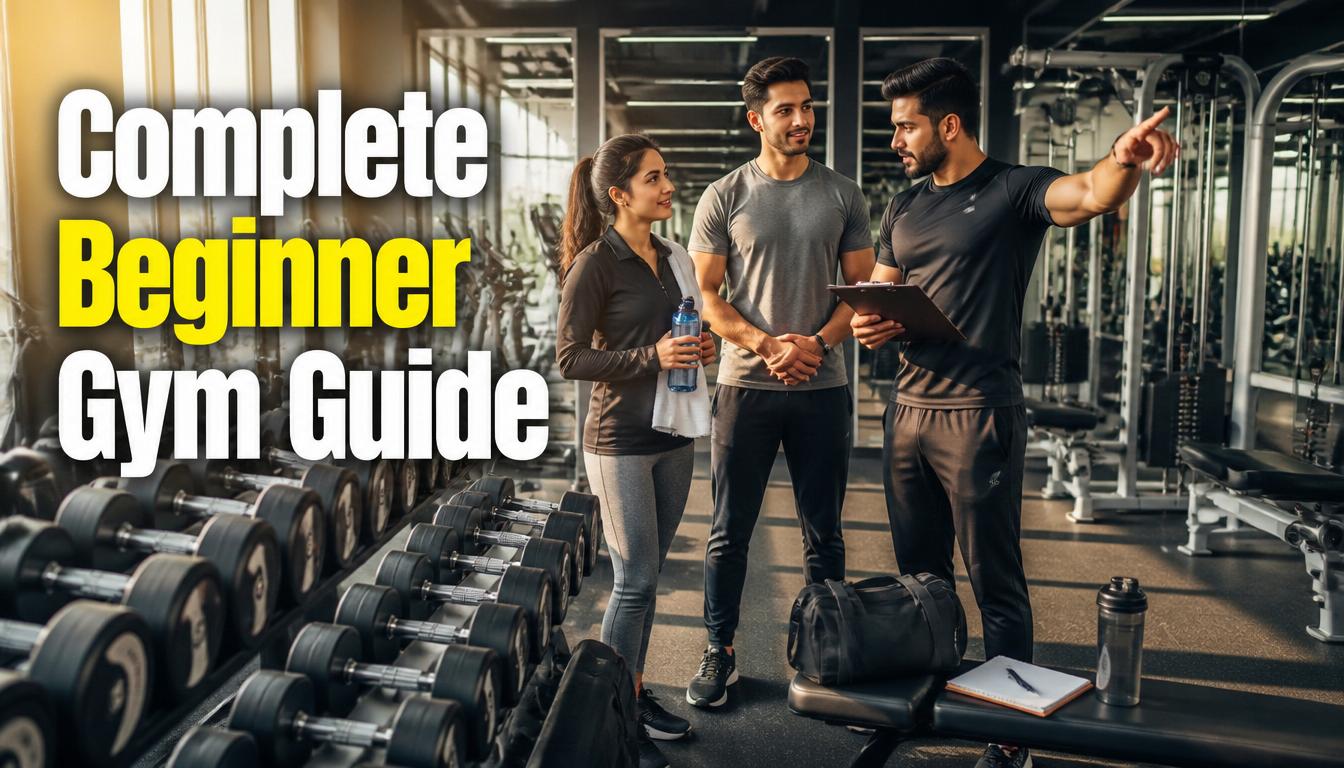
Walking into a gym for the first time can feel exciting—but it can also be overwhelming.
You see rows of machines you’ve never used, people lifting heavy weights with confidence, trainers giving instructions, and members who seem to know exactly what they’re doing. It’s natural to wonder if you belong there or whether you’ll make mistakes.
Here’s the good news: every experienced gym-goer was once a beginner too.
No one starts their fitness journey knowing every exercise, machine, or workout routine. The difference between those who succeed and those who quit isn’t talent—it’s consistency, patience, and a willingness to learn.
This Complete Beginner Gym Guide is designed to remove the confusion and help you build confidence before you even step inside a gym. Whether your goal is to lose weight, build muscle, improve your health, or simply become more active, this guide will walk you through everything you need to know.
By the end of this article, you’ll understand:
- How to choose the right gym
- What to bring on your first day
- How to set realistic fitness goals
- Basic gym etiquette
- Essential equipment you’ll use
- Beginner-friendly workout strategies
- Common mistakes to avoid
Most importantly, you’ll realize that you don’t need to be fit before joining a gym—you join a gym to become fitter.
Remember: Progress isn’t about being perfect. It’s about showing up, learning, and improving one workout at a time.

Why Starting the Gym Can Feel Intimidating
If you’re nervous about joining a gym, you’re not alone.
Many beginners delay their fitness journey because they feel unsure about what to expect. These worries are completely normal and are experienced by people of all ages and fitness levels.
Let’s address some of the most common concerns.
“Everyone Will Judge Me”
This is one of the biggest fears beginners have.
In reality, most people at the gym are focused on their own workouts. They’re thinking about their next set, their progress, or getting through a challenging session—not watching someone else.
Experienced gym members often respect beginners because they know how difficult it is to take that first step.
“I Don’t Know How to Use the Machines”
Modern gyms can have dozens of different machines, and it’s impossible to know how each one works on your first visit.
The good news is that:
- Most machines include instruction diagrams.
- Gym trainers are there to help.
- Many exercises can be performed using simple equipment like dumbbells or resistance machines.
Start with the basics. You don’t need to master every machine on day one.
“I’m Not Fit Enough Yet”
Many people believe they should get fit before joining a gym.
This is a myth.
The gym is where you build fitness—not where you’re expected to already have it.
Whether you’re overweight, underweight, or haven’t exercised in years, every workout is a step toward becoming healthier.
“What If I Do Something Wrong?”
Making mistakes is part of learning.
Everyone has used a machine incorrectly, forgotten an exercise, or needed guidance at some point.
What’s important is being open to learning and asking for help when needed.
Why Joining a Gym Is One of the Best Decisions You Can Make
A gym isn’t just a place to lift weights.
It’s an environment designed to help you improve both your physical and mental well-being.
Here are some of the biggest benefits of regular gym training.
Better Physical Health
Regular exercise can help you:
- Improve cardiovascular fitness
- Increase strength
- Enhance flexibility
- Build endurance
- Improve posture
- Maintain healthy body weight
Even a few workouts each week can make a noticeable difference over time.
Increased Confidence
As you become stronger and healthier, you’ll likely notice improvements beyond your physical appearance.
Many beginners report feeling:
- More energetic
- More confident
- More productive
- Better able to handle daily tasks
Fitness is about feeling better, not just looking different.
Improved Mental Well-Being
Exercise has been shown to support mental health by reducing stress and improving mood.
Regular physical activity can also:
- Boost energy levels
- Improve sleep quality
- Enhance focus
- Promote overall well-being
If you’re feeling overwhelmed by work or studies, a consistent workout routine can become a valuable part of your self-care.
Building Healthy Habits
One of the greatest benefits of joining a gym is developing discipline.
When you commit to regular workouts, you’re also building habits that can positively influence other areas of your life, such as nutrition, sleep, and time management.
Set Clear Fitness Goals Before You Begin
Walking into the gym without a plan is like starting a road trip without a destination.
Before your first workout, ask yourself:
“What do I want to achieve?”
Your answer will help you choose the right exercises, workout routine, and even the right gym.
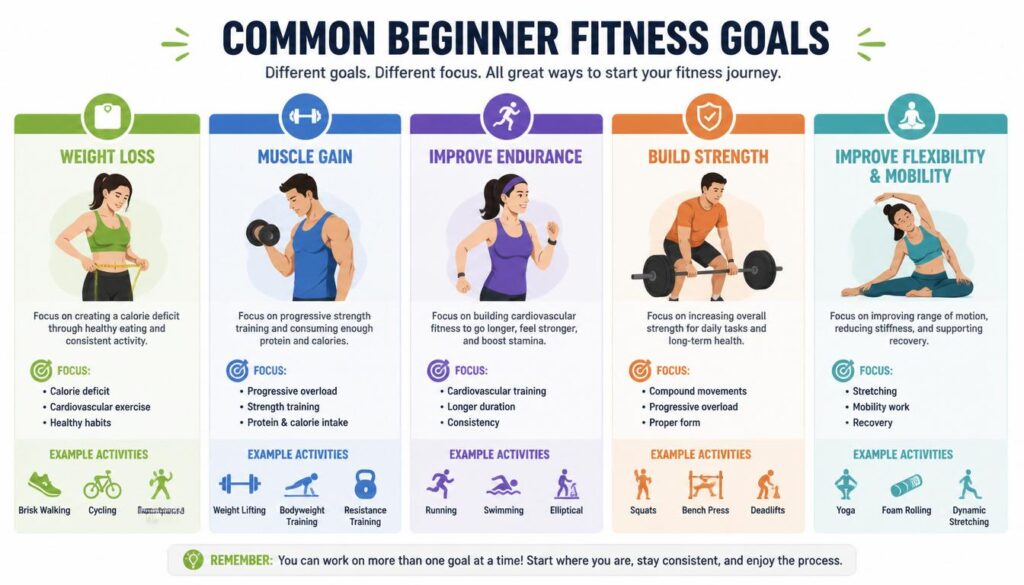
Goal 1: Lose Weight
If your primary goal is weight loss, focus on:
- Strength training
- Cardio exercises
- Healthy eating habits
- Staying consistent
Remember, strength training helps preserve muscle while losing body fat.
Goal 2: Build Muscle
If you want to gain muscle, prioritize:
- Progressive strength training
- Adequate protein intake
- Quality sleep
- Proper recovery
Building muscle takes time, so be patient and focus on gradual progress.
Goal 3: Improve Overall Fitness
Not everyone trains for a specific body transformation.
You may simply want to:
- Feel healthier
- Increase energy
- Improve stamina
- Reduce stress
- Stay active
A balanced workout routine that includes strength, cardio, and flexibility exercises is ideal for general fitness.
Goal 4: Increase Strength
If your focus is becoming stronger, your workouts should emphasize compound exercises such as:
- Squats
- Deadlifts
- Bench Press
- Overhead Press
- Rows
Learning proper technique should always come before lifting heavier weights.
Fitness Goals Comparison
| Goal | Primary Focus | Recommended Training |
|---|---|---|
| Weight Loss | Fat reduction | Strength + Cardio |
| Muscle Gain | Build muscle | Progressive resistance training |
| General Fitness | Health | Balanced workouts |
| Strength | Increase power | Compound lifts |
Choosing the Right Gym
Not every gym is the right fit for every beginner.
Before purchasing a membership, consider:
- Distance from home or work
- Membership cost
- Equipment quality
- Cleanliness
- Trainer availability
- Operating hours
- Overall atmosphere
A gym that fits your lifestyle is one you’re far more likely to visit consistently.
Related Guide: How to Choose the Right Gym for Your Fitness Goals
What to Bring on Your First Day at the Gym
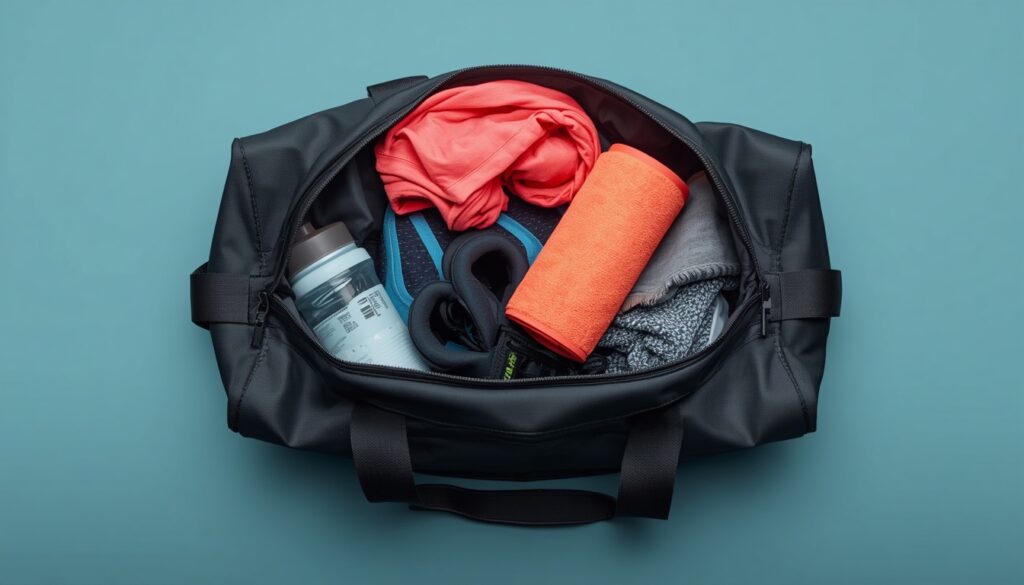
Packing the right essentials will help you feel more prepared and comfortable.
| Item | Why You Need It |
|---|---|
| Water Bottle | Stay hydrated |
| Workout Clothes | Comfort and flexibility |
| Athletic Shoes | Proper support and safety |
| Small Towel | Hygiene |
| Gym Gloves (Optional) | Better grip and hand protection |
| Lock | Secure locker storage |
| Headphones | Personal motivation |
| Notebook or Fitness App | Track workouts |
Don’t worry about buying expensive accessories before you start. Comfortable clothing, supportive shoes, and a water bottle are enough for most beginners.
Beginner Tip 💡
Focus on learning, not impressing.
Your first few weeks at the gym should be about building confidence, mastering proper technique, and creating a consistent routine—not lifting the heaviest weights.
Quick Self-Assessment Checklist
Before your first workout, ask yourself:
- ✅ What is my primary fitness goal?
- ✅ Have I chosen a gym that fits my lifestyle?
- ✅ Do I have comfortable workout clothes and shoes?
- ✅ Am I prepared to train consistently for at least 8–12 weeks?
- ✅ Do I understand that progress takes time?
- ✅ Am I willing to learn proper exercise technique before increasing weight?
Answering “yes” to these questions will help you start your fitness journey with the right mindset.
Your First Workout, Gym Equipment & Nutrition Basics
You’ve chosen a gym, packed your essentials, and set your fitness goals. Congratulations—you’ve already completed the hardest part: getting started.
Now comes the next challenge: understanding how the gym works.
Many beginners feel overwhelmed by unfamiliar equipment, confusing workout routines, and experienced lifters who seem to know exactly what they’re doing. The good news is that you don’t need to learn everything on your first day. Focus on mastering the basics, and your confidence will grow with every workout.
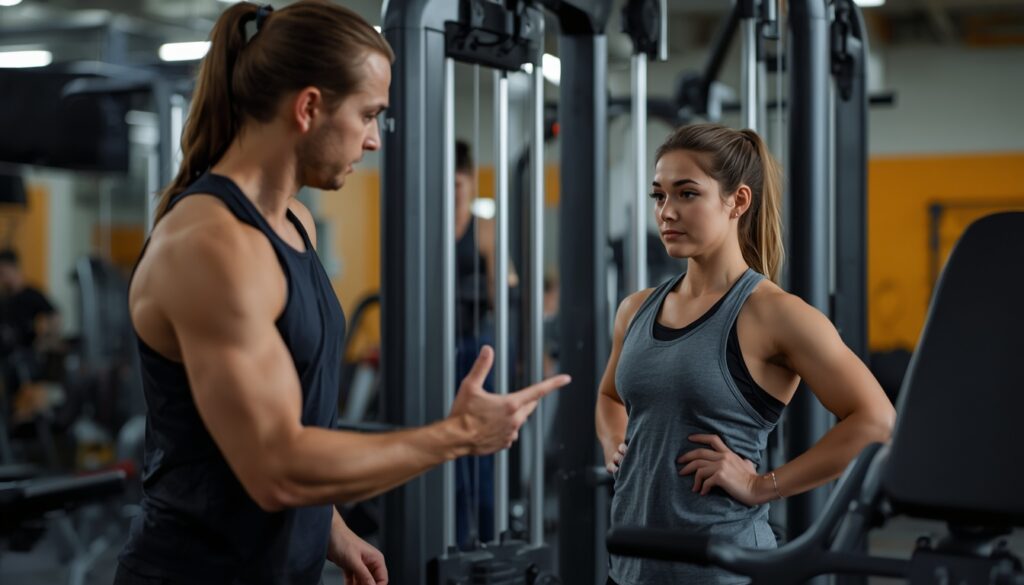
Understanding Basic Gym Equipment
Most gyms have several training areas, each designed for a different purpose. Knowing what each area is used for will help you train more confidently.
1. Cardio Machines
Cardio equipment improves heart health, burns calories, and increases endurance.
Common Cardio Machines
- Treadmill
- Stationary Bike
- Elliptical Trainer
- Rowing Machine
- Stair Climber
Best For
- Weight loss
- Warm-ups
- Improving cardiovascular fitness
- Active recovery
Beginner Tip: Start with 5–10 minutes of light cardio before your workout to increase blood flow and prepare your muscles.
2. Free Weights
Free weights allow your body to move naturally while engaging multiple muscle groups.
Examples include:
- Dumbbells
- Barbells
- Weight Plates
- Kettlebells
Benefits
- Builds strength
- Improves coordination
- Activates stabilizing muscles
- Allows progressive overload
Free weights are highly effective, but beginners should focus on learning proper form before increasing weight.
3. Resistance Machines
Resistance machines guide your movement, making them an excellent choice for beginners.
Popular machines include:
- Leg Press
- Chest Press
- Lat Pulldown
- Seated Row
- Shoulder Press
- Leg Extension
- Leg Curl
Why Beginners Like Machines
- Easier to learn
- Reduced injury risk
- Better muscle isolation
- Controlled movement
4. Cable Machines
Cable machines provide constant resistance throughout an exercise.
Common cable exercises:
- Triceps Pushdowns
- Cable Rows
- Face Pulls
- Cable Chest Fly
- Bicep Curls
These machines are versatile and suitable for both beginners and advanced gym-goers.
5. Functional Training Area
Many modern gyms include an open space equipped with:
- Battle Ropes
- Resistance Bands
- Medicine Balls
- TRX Suspension Trainers
- Plyometric Boxes
This area is ideal for improving balance, coordination, athletic performance, and overall fitness.
Quick Equipment Guide
| Equipment | Best For | Beginner Friendly |
|---|---|---|
| Treadmill | Cardio | ✅ |
| Stationary Bike | Cardio | ✅ |
| Dumbbells | Strength | ✅ (Light weights) |
| Barbell | Strength | ⚠️ Learn proper technique first |
| Resistance Machines | Strength | ✅ |
| Cable Machine | Strength | ✅ |
| Kettlebells | Functional Fitness | ⚠️ Learn correct form |
| Battle Ropes | Conditioning | ✅ |
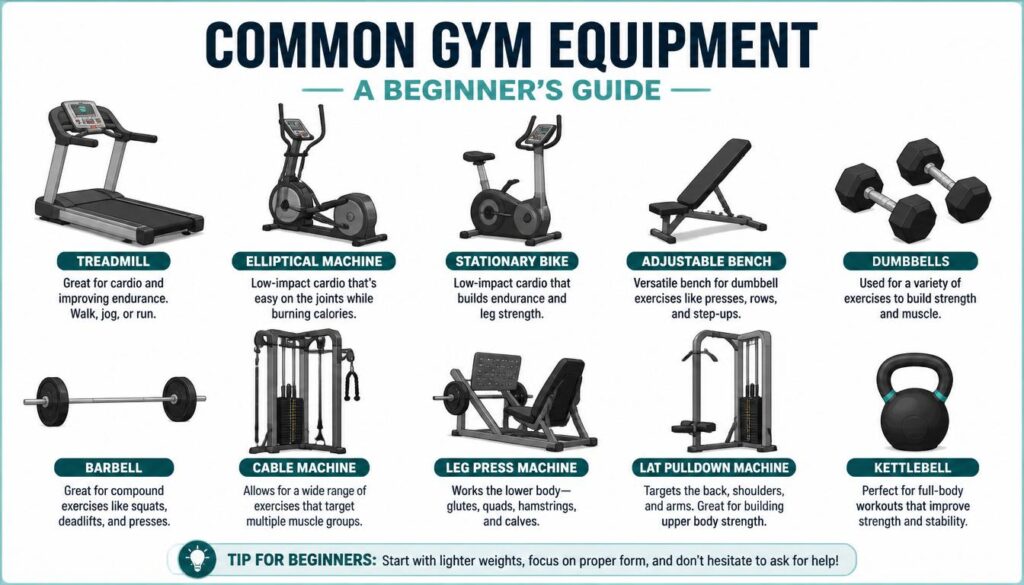
Basic Gym Etiquette Everyone Should Know
Good gym etiquette creates a respectful environment for everyone.
Following these simple rules shows consideration for fellow members and helps keep the gym clean and safe.
Wipe Equipment After Use
Use the cleaning supplies provided to wipe down benches, machines, and cardio equipment after your workout.
Re-Rack Your Weights
Always return dumbbells, barbells, and weight plates to their proper place.
Leaving weights on the floor creates safety hazards for other members.
Share Equipment
During busy hours, avoid occupying multiple machines at once.
If someone asks to “work in” between your sets, be polite if it’s practical to do so.
Respect Personal Space
Avoid standing too close to someone while they’re exercising.
Everyone deserves enough room to train safely.
Keep Phone Use Minimal
Using your phone to track workouts or change music is fine.
However, avoid sitting on equipment while scrolling through social media.
Wear Appropriate Clothing
Choose comfortable workout clothes and supportive athletic shoes.
Avoid clothing that restricts movement or creates safety risks.
Pro Tip: Good gym etiquette is just as important as good workout technique. Respectful members contribute to a positive gym culture that benefits everyone.

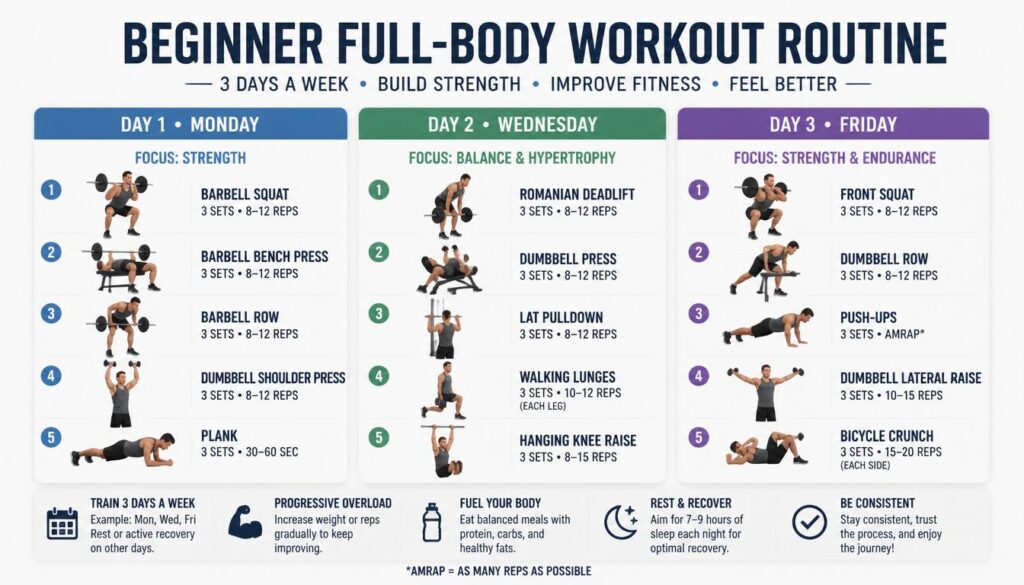
A Beginner-Friendly 3-Day Workout Plan
If you’re new to strength training, a simple full-body routine is one of the best ways to build confidence and learn proper movement patterns.
Aim to train on non-consecutive days (for example, Monday, Wednesday, and Friday) to give your muscles time to recover.
Day 1 – Full Body
| Exercise | Sets | Reps |
|---|---|---|
| Bodyweight Squats | 3 | 10–12 |
| Chest Press Machine | 3 | 10–12 |
| Lat Pulldown | 3 | 10–12 |
| Seated Shoulder Press | 2 | 12 |
| Plank | 3 | 20–30 seconds |
| Brisk Walk | 10–15 minutes | — |
Day 2 – Full Body
| Exercise | Sets | Reps |
|---|---|---|
| Leg Press | 3 | 10–12 |
| Dumbbell Bench Press | 3 | 10–12 |
| Seated Cable Row | 3 | 10–12 |
| Dumbbell Bicep Curl | 2 | 12 |
| Triceps Pushdown | 2 | 12 |
| Stationary Bike | 10–15 minutes | — |
Day 3 – Full Body
| Exercise | Sets | Reps |
|---|---|---|
| Goblet Squat | 3 | 10 |
| Dumbbell Romanian Deadlift | 3 | 10 |
| Incline Chest Press Machine | 3 | 10 |
| Assisted Pull-Up Machine or Lat Pulldown | 3 | 10 |
| Standing Dumbbell Shoulder Press | 2 | 12 |
| Walking | 15–20 minutes | — |
Important Notes
- Rest 60–90 seconds between sets.
- Use a weight that feels challenging but still allows good technique.
- Stop each set with 1–2 repetitions left in reserve instead of training to complete failure.
- Increase weight only when you can complete all prescribed repetitions comfortably with proper form.
Always Warm Up Before Training
Skipping your warm-up is one of the most common beginner mistakes.
A proper warm-up prepares your muscles, joints, and nervous system for exercise while reducing the risk of injury.
5–10 Minute Warm-Up Routine
- Brisk walking
- Light cycling
- Arm circles
- Leg swings
- Bodyweight squats
- Hip circles
- Shoulder rolls
The goal isn’t to get tired—it’s to prepare your body for movement.
Don’t Forget to Cool Down
After finishing your workout:
- Walk for 3–5 minutes
- Perform gentle stretching
- Focus on slow, deep breathing
- Drink water
Cooling down helps your heart rate return to normal and promotes flexibility.
Beginner Nutrition Basics
Your workouts are only part of the equation.
Nutrition plays a major role in helping you recover, build muscle, lose fat, and improve overall performance.
Protein
Protein supports muscle repair and growth.
Examples include:
- Chicken
- Fish
- Eggs
- Greek yogurt
- Lentils
- Beans
- Cottage cheese
Carbohydrates
Carbohydrates provide energy for your workouts.
Healthy sources include:
- Rice
- Oats
- Whole wheat bread
- Potatoes
- Fruits
Healthy Fats
Healthy fats support hormone production and overall health.
Choose foods such as:
- Nuts
- Seeds
- Avocados
- Olive oil
Hydration
Drink water throughout the day, not just during your workout.
Staying hydrated supports exercise performance and recovery.
Simple Pre-Workout Meal Ideas
| Time Before Workout | Example Meal |
|---|---|
| 2–3 hours | Grilled chicken, rice, vegetables |
| 1 hour | Banana with peanut butter |
| 30–45 minutes | Fruit or yogurt (light snack if needed) |
Simple Post-Workout Meal Ideas
| Goal | Meal Example |
|---|---|
| Muscle Gain | Chicken, rice, vegetables |
| Weight Loss | Grilled fish with salad |
| General Fitness | Eggs with whole-grain toast and fruit |
Expert Advice: Don’t overcomplicate nutrition in your first few weeks. Focus on eating balanced meals consistently, staying hydrated, and getting enough protein rather than chasing perfect diets.
Common Beginner Mistakes to Avoid
Many beginners slow their progress by making avoidable mistakes.
Watch out for these common pitfalls:
- ❌ Skipping warm-ups
- ❌ Using weights that are too heavy
- ❌ Comparing yourself to experienced lifters
- ❌ Ignoring proper technique
- ❌ Following random workouts from social media
- ❌ Not eating enough protein
- ❌ Expecting immediate results
- ❌ Training every day without adequate rest
Avoiding these mistakes will help you stay healthy, motivated, and consistent.
Staying Consistent, Recovery, FAQs & Final Thoughts
Starting the gym is an achievement—but staying consistent is what transforms your body and improves your health.
Many beginners feel highly motivated during the first few weeks. They buy new workout clothes, watch fitness videos, and rarely miss a session. However, as the excitement fades, life gets busy, workouts become challenging, and motivation naturally fluctuates.
The secret to long-term success isn’t staying motivated every day—it’s building habits that keep you going even when motivation is low.
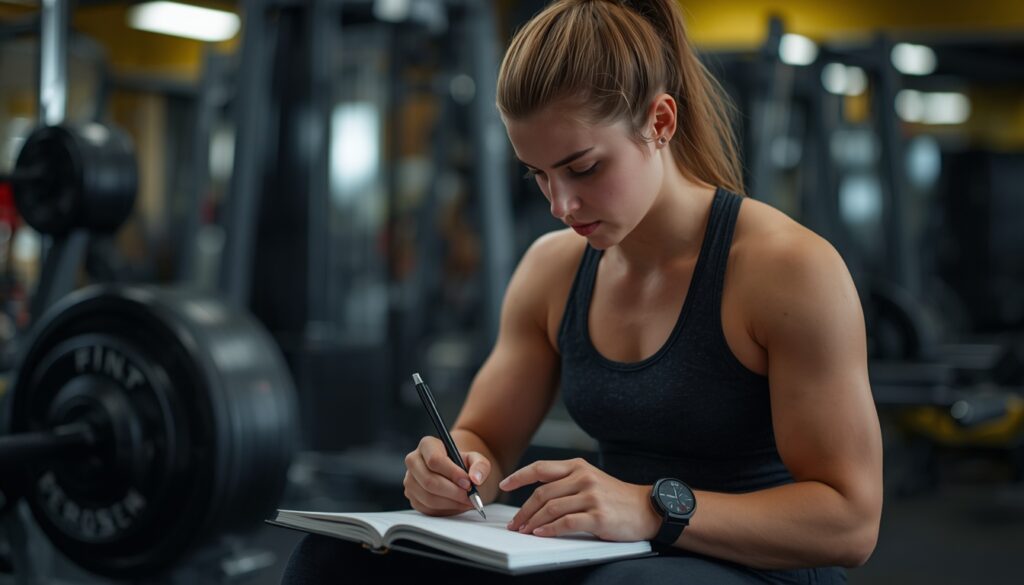
How to Stay Motivated at the Gym
Motivation is helpful, but it’s not enough on its own. Successful gym-goers rely on routines and realistic expectations rather than waiting to “feel motivated.”
Set Small, Achievable Goals
Instead of saying:
❌ “I want to lose 20 kg.”
Break it into manageable milestones:
- Lose the first 2 kg
- Complete 12 gym sessions this month
- Increase your squat by 5 kg
- Drink enough water every day
Small wins build confidence and momentum.
Track Your Progress
Progress isn’t always visible in the mirror.
Keep track of:
- Body weight
- Waist measurements
- Strength improvements
- Workout consistency
- Energy levels
- Progress photos (every 4 weeks)
You’ll often notice improvements in strength and endurance before seeing major physical changes.
Follow a Routine
Decide exactly when you’ll train.
Examples:
- Monday, Wednesday, Friday at 6 PM
- Tuesday, Thursday, Saturday at 7 AM
Treat your workouts like important appointments.
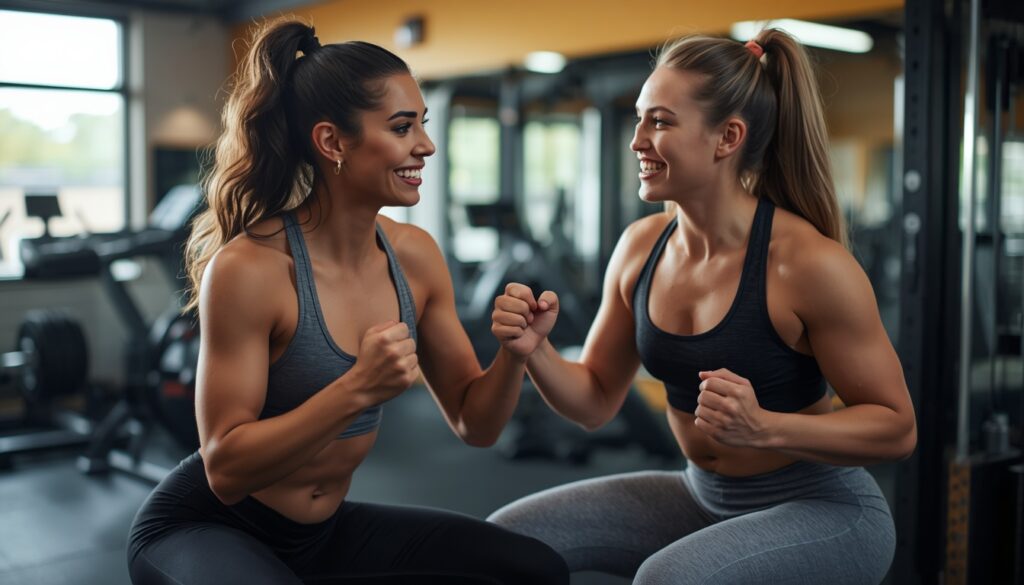
Find a Workout Partner
Training with a friend can:
- Increase accountability
- Make workouts more enjoyable
- Improve consistency
- Provide encouragement during difficult sessions
Choose someone who motivates you rather than distracts you.
Celebrate Progress
Reward consistency instead of perfection.
Examples:
- New workout clothes
- Better training shoes
- Healthy meal at your favorite restaurant
- Fitness accessories
Avoid using junk food as a reward for exercising.
When Should Beginners Increase Weight?
One of the biggest mistakes beginners make is trying to lift heavier every workout.
Progressive overload is important—but so is patience.
Increase the Weight When:
- You complete every set with proper technique.
- The last few repetitions no longer feel challenging.
- You maintain full control throughout the movement.
- Your trainer agrees your technique is solid.
For most exercises, increasing the weight by 2.5–5 kg (or the smallest available increment) is a sensible approach.
Never sacrifice form just to lift heavier.
Expert Tip: Good technique today prevents injuries tomorrow.
Recovery Is Just as Important as Training
Muscles don’t grow during your workout—they recover and adapt afterward.
Ignoring recovery can slow your progress and increase your risk of injury.
Prioritize Sleep
Aim for 7–9 hours of quality sleep each night.
Good sleep supports:
- Muscle recovery
- Hormone balance
- Energy levels
- Mental focus
- Athletic performance
Take Rest Days
Rest days allow your muscles and joints to recover.
Light activities such as walking, stretching, or yoga can help you stay active without overloading your body.
Remember: rest is part of the training process, not a sign of laziness.
Manage Muscle Soreness
Feeling sore after your first few workouts is normal. This is often called Delayed Onset Muscle Soreness (DOMS).
To ease soreness:
- Stay hydrated
- Walk or do light movement
- Stretch gently
- Eat enough protein
- Get adequate sleep
If you experience sharp or severe pain, stop exercising and consult a qualified healthcare professional.
Should Beginners Take Supplements?
Supplements are often one of the first things beginners ask about.
The truth is that supplements should never replace a balanced diet.
Most beginners can make excellent progress by focusing on whole foods, regular exercise, and proper recovery.
Protein Powder
Protein powder is simply a convenient way to increase your protein intake if you struggle to meet your daily needs through food.
It is not required for building muscle.
Creatine Monohydrate
Creatine is one of the most researched sports supplements available and has been shown to support improvements in strength and high-intensity exercise performance when used appropriately.
If you’re considering creatine or any supplement, it’s a good idea to speak with a qualified healthcare professional or registered dietitian—especially if you have any medical conditions.
Multivitamins
A multivitamin may help fill nutritional gaps, but it should not be viewed as a substitute for a varied, nutrient-rich diet.
Important: Supplements are optional. Consistent training, balanced nutrition, and quality sleep will have a much greater impact on your results.

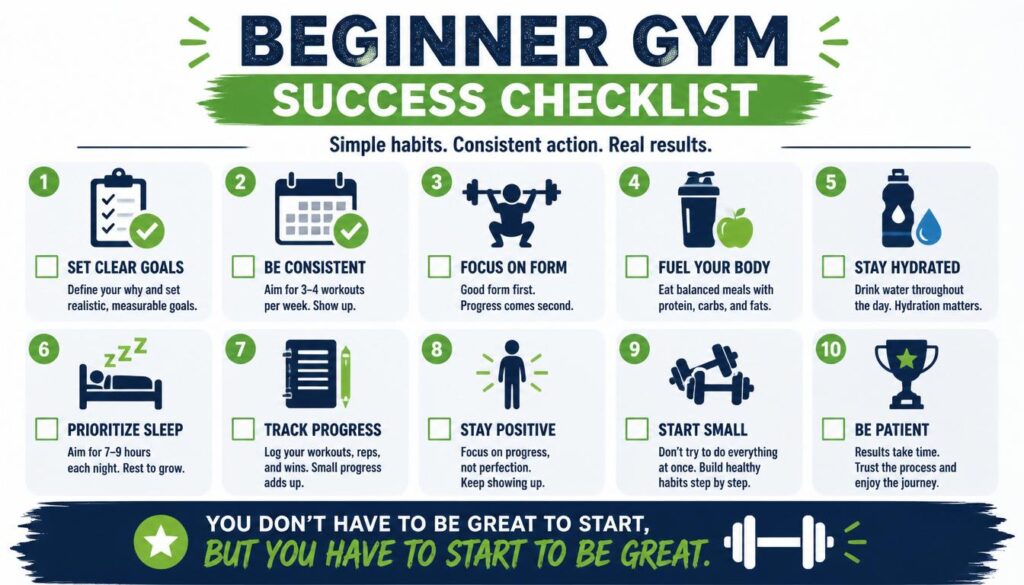
Your Complete Beginner Gym Checklist
Before you begin your fitness journey, make sure you’ve covered these essentials.
Mindset
- ✅ Set realistic goals
- ✅ Be patient with your progress
- ✅ Focus on consistency
Gym Preparation
- ✅ Choose the right gym
- ✅ Pack your gym essentials
- ✅ Learn basic equipment
Training
- ✅ Warm up before every workout
- ✅ Prioritize proper form
- ✅ Follow a structured workout plan
- ✅ Increase weight gradually
Nutrition
- ✅ Eat enough protein
- ✅ Stay hydrated
- ✅ Include balanced meals
Recovery
- ✅ Sleep 7–9 hours
- ✅ Take rest days
- ✅ Stretch after workouts
If you consistently follow this checklist, you’ll build a strong foundation for long-term success.
Frequently Asked Questions (FAQs)
1. What should I do on my first day at the gym?
Start with a simple full-body workout using light weights or machines. Focus on learning proper technique rather than lifting heavy. If available, ask a trainer to show you how to use the equipment safely.
2. How many days a week should a beginner go to the gym?
For most beginners, 3–4 workouts per week is enough to build consistency while allowing adequate recovery between sessions.
3. Should beginners do cardio or weight training?
Both are valuable. Strength training helps build muscle and maintain bone health, while cardio supports heart health and endurance. A balanced routine that includes both is ideal for most beginners.
4. How long should a beginner workout last?
A workout of 45–60 minutes is generally sufficient. Focus on quality rather than spending hours in the gym.
5. Can I build muscle without supplements?
Yes. Many people build muscle successfully through progressive strength training, balanced nutrition, sufficient protein, and proper recovery.
6. What should I eat before going to the gym?
A balanced meal containing carbohydrates and protein 1–3 hours before your workout can provide energy. If you’re short on time, a light snack such as fruit and yogurt may be suitable.
7. What should I eat after a workout?
Aim for a meal that includes protein to support muscle recovery and carbohydrates to replenish energy stores.
8. Is muscle soreness normal?
Mild muscle soreness after starting a new workout routine is common. However, severe pain, swelling, or pain that worsens should be evaluated by a healthcare professional.
9. How long does it take to see results?
Everyone progresses at a different pace. With consistent training, balanced nutrition, and good recovery, many beginners notice improvements in energy, strength, and fitness within several weeks, while visible physical changes often take longer.
10. Do I need a personal trainer?
A trainer isn’t essential for everyone, but beginners often benefit from professional guidance to learn proper technique, build confidence, and create a structured workout plan.
11. What should I wear to the gym?
Wear comfortable, breathable athletic clothing and supportive training shoes that allow you to move safely and comfortably.
12. Is it okay to feel nervous at the gym?
Absolutely. Almost everyone feels nervous when starting. As you become familiar with the environment and your routine, your confidence will naturally grow.
13. Should I work out if I’m very sore?
Light soreness is usually manageable, but if you’re experiencing significant soreness, consider a rest day or light activity. Avoid training through severe pain.
14. Can I lose weight and build muscle at the same time?
For many beginners, especially those new to resistance training, it’s possible to improve body composition by building some muscle while losing fat. Consistent training, a balanced diet, and sufficient protein are key.
15. What’s the biggest mistake beginners make?
Trying to do too much too soon. Start with manageable workouts, focus on proper technique, and increase the intensity gradually.
Leave a Reply