Strong Muscles Aren’t Built in the Gym Alone
Imagine spending months lifting heavier weights, pushing yourself through every workout, and still seeing only small changes in the mirror.
It’s frustrating—and surprisingly common.
Many people assume the solution is to train harder. In reality, the biggest obstacle often isn’t your workout at all. It’s what happens after you leave the gym.
Your muscles don’t grow while you’re lifting weights. They grow afterward, during recovery. And recovery depends heavily on one nutrient: protein.
Protein provides the amino acids your body needs to repair the tiny muscle fibers damaged during exercise. Without enough of it, even the most intense training program can’t deliver the results you’re hoping for.
The good news? You don’t need expensive supplements or imported foods. Pakistan offers plenty of affordable, protein-rich options that can help you build lean muscle naturally.
In this guide, you’ll discover the 10 best high-protein foods for muscle gain, how much protein they contain, the best time to eat them, and practical ways to include them in your daily meals.
Let’s start with the food that almost every successful bodybuilder relies on.
Why Protein Is Essential for Muscle Growth
Protein is made up of amino acids, often called the building blocks of muscle.
Every strength-training session creates tiny tears in your muscle fibers. This sounds alarming, but it’s a normal part of the muscle-building process.
When you consume enough high-quality protein, your body repairs those fibers, making them thicker and stronger than before. Over time, this leads to increased muscle size, improved strength, and faster recovery.
Protein also helps:
- Preserve muscle during weight loss
- Reduce post-workout soreness
- Support hormone production
- Improve immune function
- Keep you feeling full for longer
- Increase your metabolism slightly due to its higher thermic effect
Without adequate protein, progress slows—even if your workouts are excellent.
Quick Tip: Most active adults aiming to build muscle benefit from consuming around 1.6–2.2 grams of protein per kilogram of body weight per day, alongside consistent strength training and sufficient calories.
How Much Protein Do You Really Need?
The exact amount depends on your body weight, training intensity, and overall calorie intake.
| Body Weight | Daily Protein Goal |
|---|---|
| 50 kg | 80–110 g |
| 60 kg | 96–132 g |
| 70 kg | 112–154 g |
| 80 kg | 128–176 g |
| 90 kg | 144–198 g |
Instead of eating all your protein in one meal, aim to spread it across three to five meals throughout the day to support muscle protein synthesis.
1. Chicken Breast – The Gold Standard for Muscle Building
Protein: ~31 g per 100 g (cooked)
If you ask ten experienced bodybuilders to name one food they never skip, chicken breast will almost certainly top the list.
There’s a good reason for that.
Chicken breast offers an excellent balance of high protein, low fat, affordability, and versatility. It contains all nine essential amino acids, making it a complete protein source that’s ideal for muscle repair and growth.
Why It Stands Out
- High protein-to-calorie ratio
- Low in saturated fat (skinless)
- Easy to prepare in many ways
- Widely available across Pakistan
- Suitable for bulking and cutting phases
Best Ways to Eat It
- Grilled with vegetables
- Chicken tikka (prepared with minimal oil)
- Stir-fried with rice
- Whole wheat chicken wraps
- Added to salads
- Homemade chicken sandwiches
Common Mistake
Deep-frying chicken or coating it in heavy batter adds unnecessary calories and unhealthy fats, reducing its nutritional value.
2. Eggs – Nature’s Perfect Protein Package
Protein: ~6–7 g per large egg
Eggs have long been a favorite among athletes, and for good reason.
They provide complete protein, healthy fats, vitamins, and minerals in one convenient package. The yolk, often misunderstood, contains important nutrients such as choline, vitamin D, and healthy fats that support overall health.
Benefits
- Rich in leucine, an amino acid that plays a key role in stimulating muscle protein synthesis
- Affordable and easy to cook
- Ideal for breakfast or post-workout meals
- Highly bioavailable protein
Meal Ideas
- Boiled eggs
- Vegetable omelet
- Egg bhurji with whole wheat roti
- Egg sandwiches
- Scrambled eggs with oats
Expert Tip
Unless your healthcare provider has advised otherwise, most healthy individuals can enjoy whole eggs as part of a balanced diet. The yolk contributes valuable nutrients alongside the protein in the egg white.
3. Fish – Lean Protein with Heart-Healthy Fats
Protein: 20–25 g per 100 g (varies by type)
Fish is one of the most underrated muscle-building foods in Pakistan.
Varieties such as rohu, pomfret, tuna, and salmon (where available) provide high-quality protein, while oily fish also supply omega-3 fatty acids that support heart health and may help reduce exercise-related inflammation.
Why Fish Deserves a Place on Your Plate
- Complete protein source
- Rich in vitamins and minerals
- Easy to digest
- Supports recovery after intense training
Best Cooking Methods
- Grilled
- Baked
- Steamed
- Lightly pan-seared
Avoid
Frequent deep-fried fish, which can significantly increase calorie intake.
4. Greek Yogurt (or Thick Plain Yogurt)
Protein: ~10 g per 100 g (Greek yogurt); traditional yogurt typically contains less
Yogurt is already a staple in many Pakistani households, making it an easy addition to a muscle-building diet.
Greek yogurt is especially rich in protein because much of the liquid whey has been strained away. If Greek yogurt isn’t readily available, plain thick yogurt can still be a nutritious option.
Benefits
- Supports muscle recovery
- Contains calcium for bone health
- Provides probiotics that support gut health
- Makes a convenient snack or breakfast
Easy Meal Ideas
- Yogurt with fruit and nuts
- Smoothies
- Raita alongside grilled chicken
- Yogurt bowls with oats
5. Lentils (Daal) – Budget-Friendly Plant Protein
Protein: ~9 g per 100 g (cooked)
If you’re looking for an affordable, everyday protein source, lentils are hard to beat.
Masoor daal, moong daal, chana daal, and mash daal are widely available across Pakistan and provide not only protein but also fiber, iron, and complex carbohydrates.
While lentils aren’t complete proteins on their own, pairing them with foods like rice, whole wheat roti, or dairy helps create a more balanced amino acid profile.
Why They’re Great
- Extremely affordable
- High in fiber
- Filling and satisfying
- Easy to cook in large batches
- Suitable for vegetarians
Pro Tip
Combine daal with yogurt or a serving of eggs or chicken to increase the overall protein quality of your meal and better support muscle growth.
6. Chickpeas (Chana) – A Protein-Packed Everyday Superfood
Protein: ~9 g per 100 g (cooked)
Walk through any Pakistani market, and you’ll find chickpeas everywhere. They’re inexpensive, filling, and surprisingly rich in protein.
While chickpeas don’t provide as much protein as chicken or fish gram for gram, they’re an excellent choice for anyone looking to increase their daily protein intake without spending a fortune.
But that’s only part of the story.
Chickpeas are also loaded with complex carbohydrates and fiber, which provide long-lasting energy for workouts and help keep you full for hours.
Why Chickpeas Are Great for Muscle Gain
- Rich in plant-based protein
- Excellent source of dietary fiber
- Supports digestive health
- Provides slow-release carbohydrates
- Budget-friendly and widely available
Best Ways to Eat Chickpeas
- Boiled black chana as a snack
- Chana chaat with vegetables
- Mixed into salads
- Homemade hummus
- Chana curry with brown rice
Expert Tip
Pair chickpeas with yogurt, milk, or eggs to improve the overall protein quality of your meal.
7. Lean Beef – Protein Plus Iron for Strength
Protein: ~26 g per 100 g (cooked)
If your goal is to gain muscle while increasing strength, lean beef can be an excellent addition to your diet.
Besides being high in complete protein, beef naturally contains iron, zinc, vitamin B12, and creatine—nutrients that play important roles in energy production, oxygen transport, and muscle function.
Benefits
- Complete protein
- Naturally contains creatine
- Rich in iron and zinc
- Helps maintain muscle mass
- Highly satisfying
Healthy Cooking Ideas
- Beef kebabs
- Grilled steak
- Homemade beef mince with vegetables
- Beef stir-fry
Common Mistake
Choose lean cuts and moderate portion sizes. Processed meats and fatty cuts are higher in saturated fat and sodium, so they shouldn’t make up the bulk of your protein intake.
8. Paneer (Cottage Cheese) – Slow-Digesting Protein
Protein: ~18–20 g per 100 g (varies by recipe)
Paneer is popular across South Asia and is a valuable protein source for vegetarians.
One of its biggest advantages is that it’s rich in casein, a slow-digesting protein. That means it releases amino acids gradually over several hours, making it a satisfying option between meals or in the evening.
Benefits
- High-quality dairy protein
- Rich in calcium
- Keeps you feeling full
- Easy to prepare
- Suitable for vegetarians
Meal Ideas
- Grilled paneer
- Paneer tikka
- Paneer with vegetables
- Whole wheat paneer wraps
Pro Tip
If you’re buying paneer, compare labels when possible, as protein and fat content can vary by brand and preparation method.
9. Soy Chunks – The Budget Champion
Protein: ~50–52 g per 100 g (dry)
Many people overlook soy chunks because they’re inexpensive.
That’s a mistake.
Gram for gram (dry weight), soy chunks are among the richest protein sources available and are especially useful for vegetarians or anyone trying to increase protein intake on a budget.
Why They’re Popular
- Very high in protein
- Low in fat
- Long shelf life
- Affordable
- Versatile in cooking
Easy Meal Ideas
- Soy chunk curry
- Stir-fried soy with vegetables
- Soy pulao
- Mixed with minced meat for extra protein
Important Note
Because soy chunks absorb water during cooking, their weight increases significantly after soaking. Keep this in mind when estimating serving sizes and protein intake.
10. Milk – More Than Just a Breakfast Drink
Protein: ~3.4 g per 100 ml
Milk is one of the easiest ways to increase your daily protein intake.
Although it doesn’t contain as much protein per serving as chicken or eggs, it’s a complete protein and also provides calcium, phosphorus, potassium, and vitamins that support bone health.
For people struggling to eat enough calories during a muscle-gain phase, milk can be a practical addition to smoothies, oats, or snacks.
Best Times to Drink Milk
- Breakfast
- Post-workout shakes
- Evening snack
- Before bed (if it fits your routine and digestion)
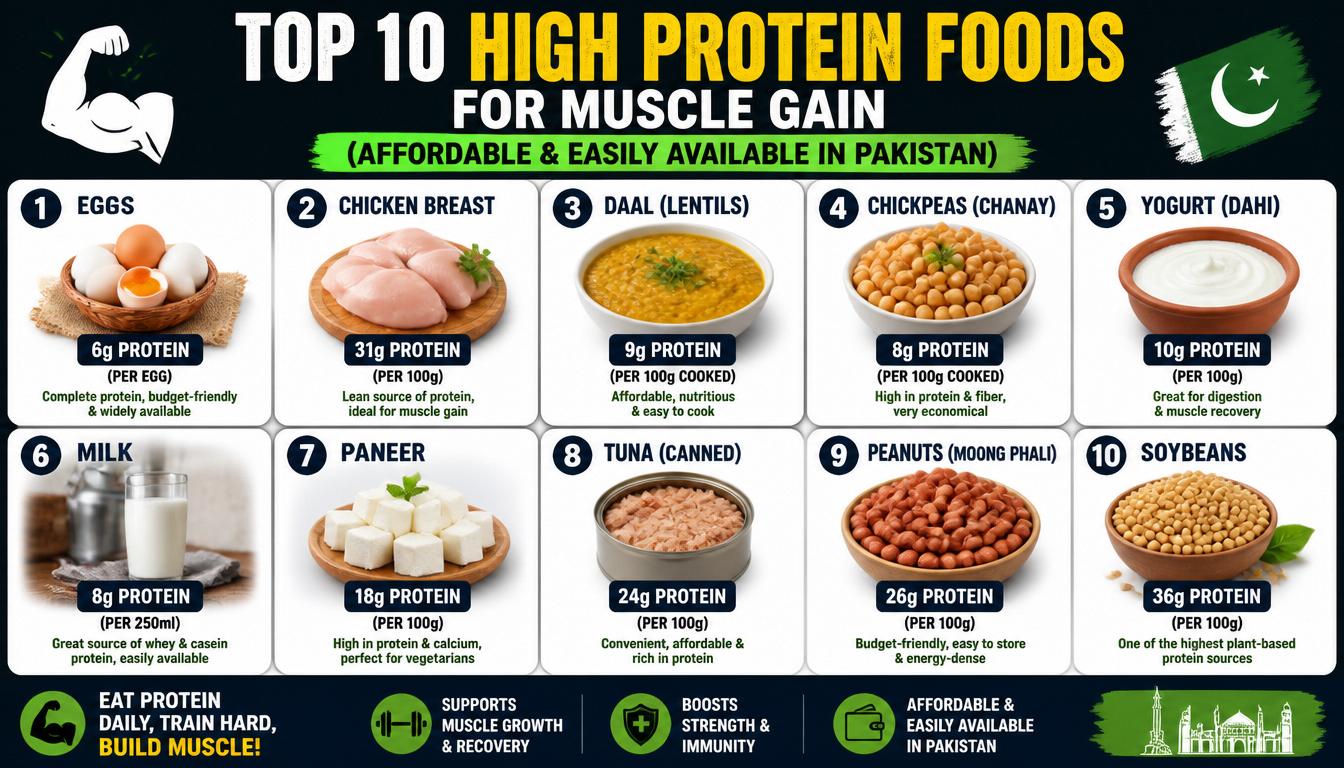
Comparison Table: Top 10 High-Protein Foods
| Food | Protein (Approx.) | Best For |
|---|---|---|
| Chicken Breast | 31 g / 100 g | Lean muscle gain |
| Lean Beef | 26 g / 100 g | Strength and recovery |
| Fish | 20–25 g / 100 g | Lean muscle + omega-3s |
| Paneer | 18–20 g / 100 g | Vegetarian muscle gain |
| Soy Chunks (Dry) | 50–52 g / 100 g | Budget-friendly protein |
| Eggs | 6–7 g each | Everyday meals |
| Greek Yogurt | 10 g / 100 g | Recovery and snacks |
| Lentils | 9 g / 100 g cooked | Affordable plant protein |
| Chickpeas | 9 g / 100 g cooked | Energy and protein |
| Milk | 3.4 g / 100 ml | Convenient daily protein |
A Sample Muscle-Gain Meal Plan
Here’s how you might combine these foods into a balanced day. Adjust portions based on your calorie and protein needs.
Breakfast
- 3 whole eggs
- Oats cooked with milk
- 1 banana
Mid-Morning Snack
- Plain yogurt
- Handful of peanuts or almonds
Lunch
- Grilled chicken breast
- Brown rice or chapati
- Mixed vegetables
Pre-Workout
- Boiled chickpeas
- Fruit
Post-Workout
- Milk-based smoothie with yogurt and fruit
- Or grilled fish with potatoes
Dinner
- Lean beef or paneer
- Salad
- Chapati
Before Bed
- Plain yogurt or a glass of milk
Common Protein Mistakes That Slow Muscle Growth
Even with a good workout routine, these habits can limit your progress.
1. Not Eating Enough Overall
Protein is important, but if you’re trying to gain muscle and consistently eat too few calories, your body has less energy available to support growth.
2. Depending Only on Protein Shakes
Supplements can be convenient, but they shouldn’t replace balanced meals. Whole foods provide vitamins, minerals, fiber, and healthy fats that powders don’t fully replicate.
3. Ignoring Carbohydrates
Protein repairs muscles, while carbohydrates help fuel your workouts and replenish energy stores. Both play important roles in a muscle-building diet.
4. Skipping Meals
Going long periods without eating can make it harder to meet your daily protein target.
5. Expecting Overnight Results
Building muscle takes consistency. Focus on steady progress over weeks and months rather than chasing quick fixes.
Frequently Asked Questions
Can I build muscle without protein powder?
Yes. Many people meet their protein needs through foods such as chicken, eggs, fish, dairy, lentils, chickpeas, and soy products. Protein powder is simply a convenient supplement, not a requirement.
Which protein food is best for beginners?
Chicken breast, eggs, yogurt, and lentils are excellent starting points because they’re nutritious, easy to prepare, and widely available.
Is a vegetarian muscle-building diet possible?
Absolutely. Foods like paneer, soy chunks, lentils, chickpeas, yogurt, and milk can provide substantial protein when planned well.
Should I eat protein before or after a workout?
Including protein within a few hours before or after training can support muscle recovery. What’s most important is meeting your total daily protein goal consistently.
How many meals should contain protein?
Aim to include a good source of protein in every main meal and, if helpful, in one or two snacks throughout the day.
Key Takeaways
- Protein provides the building blocks your muscles need to recover and grow.
- Whole foods should form the foundation of your muscle-building diet.
- Pakistan offers many affordable, high-protein options—no expensive imports required.
- Spread your protein intake across the day rather than eating it all at once.
- Combine consistent strength training, adequate sleep, and balanced nutrition for the best long-term results.
Final Thoughts
Muscle gain doesn’t come from one “superfood.” It comes from consistently eating enough high-quality protein, training with purpose, and giving your body time to recover.
Whether you’re just starting your fitness journey or looking to take your progress to the next level, you don’t need a complicated diet. A plate filled with chicken, eggs, fish, lentils, yogurt, or other protein-rich foods—paired with regular exercise and healthy habits—can make a meaningful difference over time.
The most effective diet is the one you can follow consistently. Start with a few of the foods on this list, build meals you genuinely enjoy, and focus on steady improvement rather than perfection.
Ready to Build Muscle Smarter?
If you’re serious about reaching your fitness goals, nutrition is only one piece of the puzzle. The right training environment and expert guidance can make your efforts even more effective.
On FitAdda.pk, you can:
- Find gyms near you
- Connect with certified personal trainers
- Explore fighting clubs and martial arts academies
- Discover fitness events in your city
- Learn more through practical fitness and nutrition guides
Choose one or two protein-rich foods from this list, include them in your meals this week, and stay consistent. Small, sustainable habits often lead to the biggest transformations over time.
Leave a Reply