What is a Push Pull Legs workout?
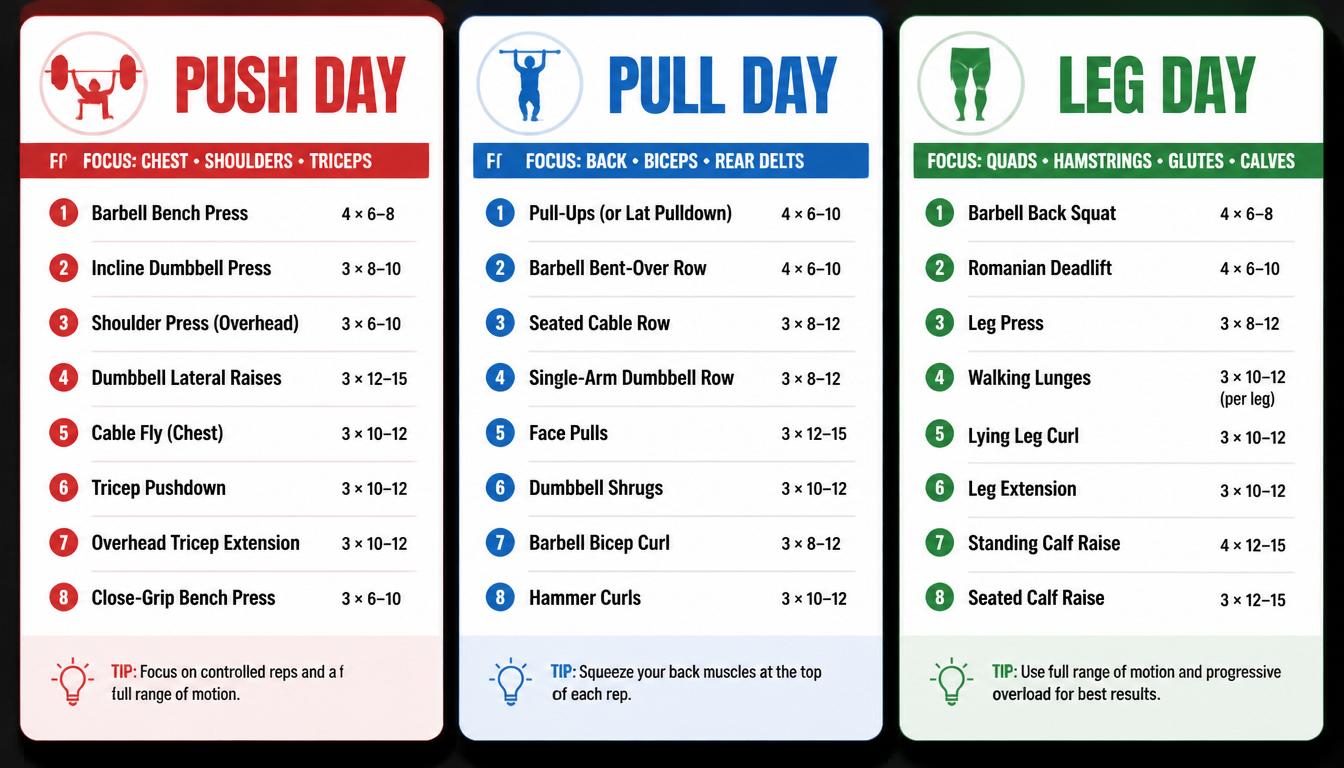
A Push Pull Legs (PPL) workout is a training split that organizes exercises by movement pattern: Push day trains chest, shoulders, and triceps; Pull day trains back and biceps; Leg day trains quads, hamstrings, glutes, and calves. It can be run 3 or 6 days a week and is one of the most effective, sustainable ways to build muscle and strength once you’ve mastered the basics.
Introduction
If you’ve spent a few months in the gym doing full body workouts and you’re ready for more volume, more focus, and faster muscle growth, the Push Pull Legs split is probably the next logical step. It’s one of the most popular and time-tested training splits used by lifters worldwide — and for good reason.
Unlike a full body routine where every muscle group gets a small amount of work each session, PPL lets you dedicate an entire day to pushing muscles, another to pulling muscles, and another to legs. This means more total sets per muscle group per week, better recovery between sessions for the same muscles, and a structure that’s easy to scale as you progress.
In this guide, you’ll learn:
- What Push Pull Legs actually means and why it works
- Who should (and shouldn’t) use this split
- A complete Push day, Pull day, and Leg day workout
- 3-day and 6-day weekly schedule options
- Proper form cues for key exercises
- Common mistakes lifters make on PPL
- Answers to the most common PPL questions
What Does “Push Pull Legs” Actually Mean?
The split is organized around how your muscles function during movement, not just which body part they belong to:
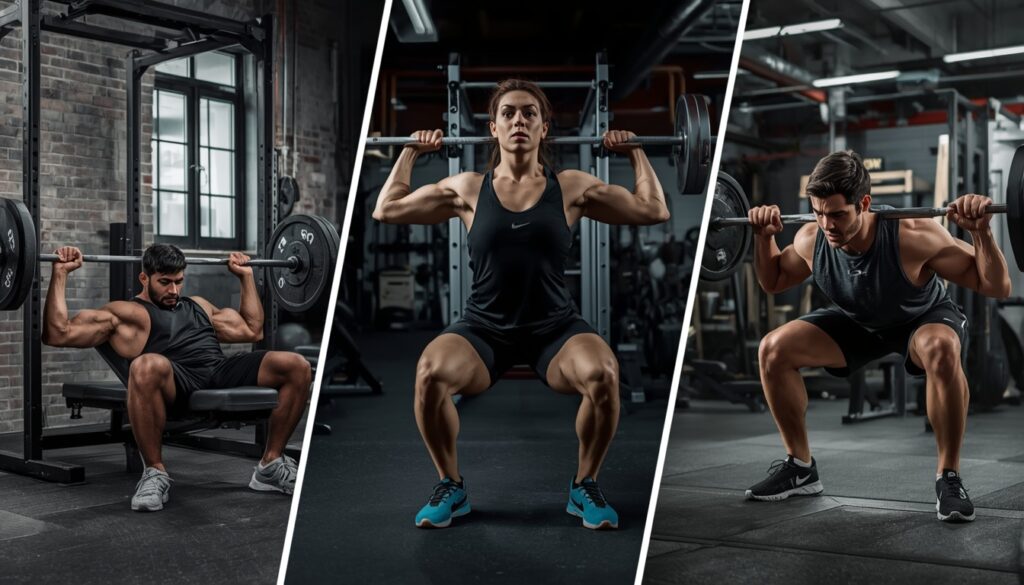
- Push muscles (chest, shoulders, triceps) work together whenever you push something away from your body — a bench press, an overhead press, a push-up.
- Pull muscles (back, biceps, rear shoulders) work together whenever you pull something toward your body — a row, a pull-up, a deadlift’s initial pull.
- Leg muscles (quads, hamstrings, glutes, calves) handle everything lower body — squats, lunges, leg presses, calf raises.
Grouping exercises this way means muscles that assist each other get trained together and then get proper recovery time before being worked again — instead of, say, training triceps on chest day and then again on shoulder day with no rest in between.
Who Should Use a Push Pull Legs Split?
PPL works best for people who already have some training experience and want to increase training volume and focus. It’s a great fit if:
- You’ve built a foundation with full body training for at least a few months
- You want to train 3–6 days a week
- You’re aiming for muscle growth (hypertrophy) or strength, not just general fitness
- You enjoy having a clear, focused plan for each gym session
It may not be ideal if you’re brand new to the gym (a full body routine is usually better for the first few months) or if you can only commit to 1–2 days a week, since PPL benefits from higher training frequency.
The Complete Push Pull Legs Workout
Below is a full PPL routine covering all three days. Each session should include a short warm-up (5 minutes of light cardio plus a couple of warm-up sets on your first exercise) before working sets begin.
Push Day (Chest, Shoulders, Triceps)
| Exercise | Sets x Reps | Rest Between Sets |
|---|---|---|
| Barbell or Dumbbell Bench Press | 4 x 6–10 | 90–120 sec |
| Standing Overhead Shoulder Press | 3 x 8–10 | 90 sec |
| Incline Dumbbell Press | 3 x 8–12 | 75–90 sec |
| Lateral Raises | 3 x 12–15 | 60 sec |
| Triceps Pushdown or Dips | 3 x 10–12 | 60 sec |
| Overhead Triceps Extension | 2 x 12–15 | 60 sec |
Pull Day (Back, Biceps)
| Exercise | Sets x Reps | Rest Between Sets |
|---|---|---|
| Deadlift or Barbell Row | 4 x 6–8 | 120 sec |
| Pull-Ups or Lat Pulldown | 3 x 8–12 | 90 sec |
| Seated Cable Row | 3 x 10–12 | 90 sec |
| Face Pulls | 3 x 12–15 | 60 sec |
| Barbell or Dumbbell Bicep Curl | 3 x 10–12 | 60 sec |
| Hammer Curl | 2 x 12–15 | 60 sec |
Leg Day (Quads, Hamstrings, Glutes, Calves)
| Exercise | Sets x Reps | Rest Between Sets |
|---|---|---|
| Barbell Back Squat | 4 x 6–10 | 120 sec |
| Romanian Deadlift | 3 x 8–10 | 90–120 sec |
| Leg Press | 3 x 10–12 | 90 sec |
| Walking Lunges | 3 x 10–12 per leg | 75 sec |
| Leg Curl | 3 x 12–15 | 60 sec |
| Standing Calf Raise | 4 x 12–15 | 45–60 sec |
Weekly Schedule Options
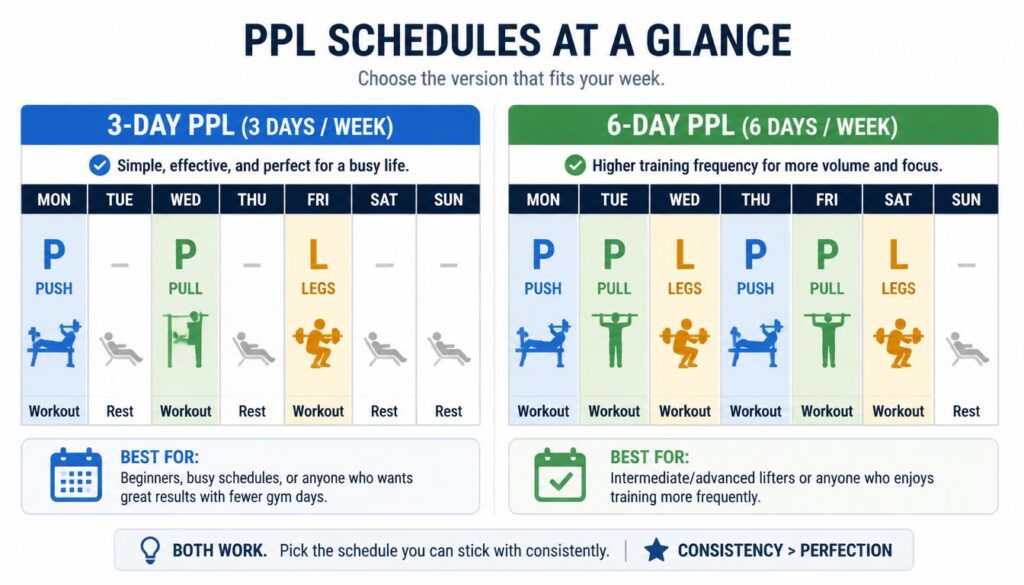
PPL is flexible and can be run at different frequencies depending on your experience level and available time.
3-Day Push Pull Legs (Beginner to Early Intermediate)
| Day | Workout |
|---|---|
| Monday | Push |
| Tuesday | Rest |
| Wednesday | Pull |
| Thursday | Rest |
| Friday | Legs |
| Saturday | Rest or light activity |
| Sunday | Rest |
6-Day Push Pull Legs (Intermediate to Advanced)
| Day | Workout |
|---|---|
| Monday | Push |
| Tuesday | Pull |
| Wednesday | Legs |
| Thursday | Push |
| Friday | Pull |
| Saturday | Legs |
| Sunday | Rest |
The 6-day version doubles your weekly training volume per muscle group, which can accelerate results but also demands more recovery, sleep, and nutrition to support it. Beginners to this split should start with the 3-day version and only move to 6 days once recovery, sleep, and consistency are solid.
Proper Form Cues for Key PPL Exercises
Bench Press: Keep your shoulder blades pulled back and down, feet flat on the floor, and lower the bar with control to your mid-chest before pressing up in a straight line.
Barbell Row: Hinge at the hips with a flat back, pull the bar toward your lower ribcage, and avoid using momentum to swing the weight up.
Squat: Brace your core, push your hips back and down, keep your knees tracking over your toes, and drive through your heels to stand back up.
Deadlift: Keep the bar close to your shins and body throughout the lift, maintain a neutral spine, and drive through your legs before your back finishes the movement.
Overhead Press: Keep your core tight to avoid arching your lower back, and press the bar in a straight path directly overhead.
Common Mistakes People Make on Push Pull Legs
- Jumping straight to 6 days without the recovery capacity (sleep, nutrition, experience) to support it.
- Copying someone else’s exact weights instead of progressing at their own pace.
- Neglecting rear delts and hamstrings, which are easy to underwork on a pure push/pull/legs split if exercise selection isn’t balanced.
- Skipping warm-up sets before heavy compound lifts like squats and deadlifts.
- Not tracking weights and reps, making it hard to know if they’re actually progressing week to week.
- Training to complete failure on every set, which increases injury risk and slows recovery unnecessarily.
- Ignoring sleep and protein intake, which are essential for recovering from the higher volume PPL involves.
- Doing too much accessory work and running out of energy for the main compound lifts.
- Staying on the same weights for months instead of applying progressive overload.
- Switching programs too often instead of giving PPL at least 8–12 weeks to show results.

Frequently Asked Questions
Is Push Pull Legs good for beginners? It can work for beginners, but most people get better results starting with a full body routine for the first few months before moving to PPL, since it allows more frequent practice of key lifts early on.
How many days a week should I do Push Pull Legs? Either 3 days (one full PPL cycle per week) or 6 days (two full cycles per week) — 3 days suits people newer to the split or with limited gym time, while 6 days suits more experienced lifters who can recover from higher frequency.
Can I build muscle on a 3-day Push Pull Legs split? Yes. A well-executed 3-day PPL routine provides sufficient volume for most people to build muscle, especially when combined with progressive overload and adequate protein intake.
Do I need a gym to do Push Pull Legs, or can I do it at home? A full gym with barbells, dumbbells, and cable machines makes PPL easier to execute as written, though a home setup with dumbbells and resistance bands can be adapted with modified exercises.
How long should each PPL session take? Most Push, Pull, or Leg sessions take 60–75 minutes including warm-up, depending on how many exercises and sets you include.
Should I do cardio on a Push Pull Legs program? Yes, light to moderate cardio can be added on rest days or after weight sessions without interfering with muscle growth, as long as it doesn’t compromise recovery for your next lifting day.
How long before I see results from Push Pull Legs? Most people notice strength improvements within 3–4 weeks, with visible muscle growth typically becoming noticeable after 8–12 weeks of consistent training and proper nutrition.
Is Push Pull Legs better than a full body routine? Neither is universally “better” — full body suits beginners and people with limited training days, while PPL suits those with more experience and more days available who want higher training volume per muscle group.
Can women do a Push Pull Legs split? Yes, PPL works equally well for men and women, since it’s based on movement patterns and training volume rather than gender-specific programming.
What should I eat to support a Push Pull Legs program? A diet with adequate protein (to support muscle repair), sufficient carbohydrates (to fuel training), and enough total calories to support your goal (muscle gain, maintenance, or fat loss) works best alongside this split.
Can I switch the order of Push, Pull, and Legs days? Yes, the order can be adjusted around your schedule as long as you’re not training the same muscle group on back-to-back days without adequate rest.
Do I need supplements to succeed on Push Pull Legs? No, supplements are optional. Whole food protein sources, consistent training, and proper rest matter far more than any supplement for progress on this program.
Conclusion
The Push Pull Legs split is one of the most effective, proven ways to build strength and muscle once you’ve moved past the beginner stage. By grouping exercises around how your muscles actually work together, it allows for higher training volume, better recovery, and a clear, repeatable structure you can stick to for months or even years.
Choose the 3-day or 6-day version based on your experience and schedule, focus on progressive overload, and give the program enough time to show results.
Looking for a gym or certified personal trainer to guide your Push Pull Legs program? Discover verified gyms and trainers across Pakistan on FitnessAdda.pk.
Leave a Reply